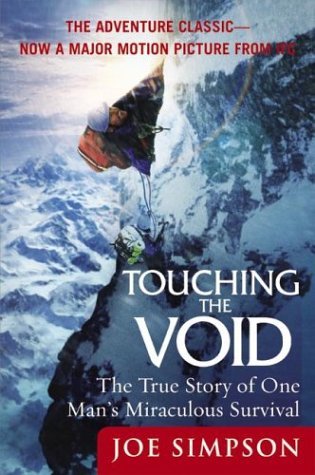
Touching the Void is the heart-stopping account of Joe Simpson’s terrifying adventure in the Peruvian Andes. He and his climbing partner, Simon, reached the summit of the remote Siula Grande in June 1985. A few days later, Simon staggered into Base Camp, exhausted and frost-bitten, with news that that Joe was dead. What happened to Joe, and how the pair dealt
with the psychological traumas that resulted when Simon was forced into the appalling decision to cut the rope, makes not only an epic of survival but a compelling testament of friendship.
“Survival begins when fear no longer controls your next decision.”
“The mountain tested friendship as brutally as it tested endurance.”
“Hope survived long after reason should have disappeared.”
“Every painful step became an argument against surrender.”
Touching the Void
Nonfiction Reader
0:00
0:00
Show Podcast Text
Today we’re exploring Touching the Void, one of the most harrowing survival memoirs ever written. More than a mountaineering story, this book is an intense examination of fear, friendship, endurance, and the terrifying instinct to survive.
The story follows climbers Joe Simpson and Simon Yates during their 1985 expedition in the Peruvian Andes. After successfully reaching the summit of Siula Grande, disaster strikes on the descent when Joe shatters his leg high above the glacier. Stranded in brutal conditions, Simon attempts the impossible task of lowering his injured friend down the mountain through storms, darkness, and collapsing ice.
Then comes the moment that made the book famous. Suspended over a crevasse and believing both of them are about to die, Simon cuts the rope connecting them.
What makes Touching the Void extraordinary is what happens next. Joe survives the fall into the crevasse and somehow begins an agonizing crawl back to camp. Readers described the experience as gripping, horrifying, and deeply human. Many praised Simpson’s honesty because he doesn’t portray himself as a fearless hero. Instead, he reveals panic, exhaustion, hallucinations, and moments of despair with brutal clarity.
The book also sparked debate. Some readers questioned the climbers’ risky decisions and argued the disaster could have been avoided entirely. Others focused on Simon’s impossible choice and whether cutting the rope was morally justified. Yet most agreed the book captures survival in its rawest form: imperfect people making impossible decisions under unimaginable pressure.
What lingers after the final page isn’t simply the mountain or the accident. It’s the realization that survival often depends less on strength than on refusing to stop moving, even when logic says there’s no reason left to continue.
That’s what makes Touching the Void unforgettable.