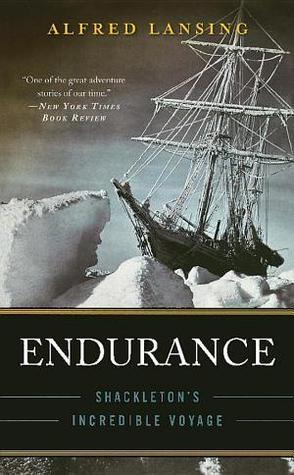
The harrowing tale of British explorer Ernest Shackleton’s 1914 attempt to reach the South Pole, one of the greatest adventure stories of the modern age. In August 1914, polar explorer Ernest Shackleton boarded the Endurance and set sail for Antarctica, where he planned to cross the last uncharted continent on foot. In January 1915, after battling its way
through a thousand miles of pack ice and only a day’s sail short of its destination, the Endurance became locked in an island of ice. Thus began the legendary ordeal of Shackleton and his crew of twenty-seven men. When their ship was finally crushed between two ice floes, they attempted a near-impossible journey over 850 miles of the South Atlantic’s heaviest seas to the closest outpost of civilization.
In Endurance, the definitive account of Ernest Shackleton’s fateful trip, Alfred Lansing brilliantly narrates the harrowing and miraculous voyage that has defined heroism for the modern age.
“Hope became their greatest weapon against the Antarctic wilderness.”
“Shackleton led with courage when survival seemed mathematically impossible.”
“The ice destroyed their ship but never their determination.”
“Every mile across the frozen sea tested the limits of human endurance.”
Endurance
Nonfiction Reader
0:00
0:00
Show Podcast Text
Today we’re exploring Endurance, Alfred Lansing’s unforgettable account of Sir Ernest Shackleton’s doomed Antarctic expedition and one of the greatest survival stories ever recorded.
In 1914, Shackleton and a crew of twenty-seven men boarded the Endurance with dreams of crossing Antarctica on foot. Instead, their ship became trapped in massive ice fields deep in the Weddell Sea. For months, the crew drifted helplessly while pressure from the ice slowly crushed the ship apart. The ice destroyed their ship but never their determination.
What followed was almost unimaginable. The men camped on floating ice for months in brutal darkness, hurricane-force winds, and subzero temperatures. Food grew scarce. Frostbite, exhaustion, and isolation threatened to destroy morale. Yet Shackleton’s leadership held the group together through every impossible moment. Shackleton led with courage when survival seemed mathematically impossible.
Lansing tells the story using journals and firsthand accounts from the crew, giving the narrative extraordinary realism and emotional power. You don’t just read about the freezing seas and collapsing ice shelves — you feel them. Every mile across the frozen sea tested the limits of human endurance.
One of the most astonishing parts of the journey came after the Endurance sank. Shackleton and a handful of men sailed an open lifeboat more than 800 miles across some of the world’s most violent oceans in search of rescue. It sounds fictional, yet every terrifying detail is true.
What makes Endurance timeless is not only the danger, but the humanity. The crew relied on teamwork, humor, discipline, and trust to survive conditions that should have killed them all. Hope became their greatest weapon against the Antarctic wilderness.
More than a historical account, Endurance is a masterclass in resilience, leadership, and the astonishing strength of the human spirit.