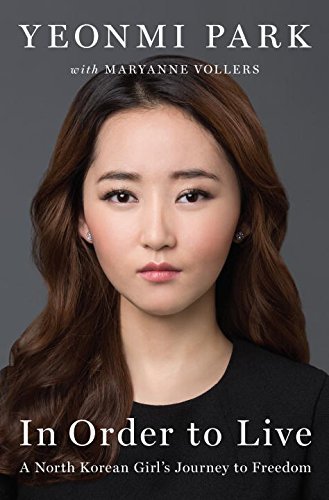
Human rights activist Park, who fled North Korea with her mother in 2007 at age 13 and eventually made it to South Korea two years later after a harrowing ordeal, recognized that in order to be “completely free,” she had to confront the truth of her past. It is an ugly, shameful story of being sold with her mother into slave marriages by Chinese brokers, and although
she at first tried to hide the painful details when blending into South Korean society, she realized how her survival story could inspire others. Moreover, her sister had also escaped earlier and had vanished into China for years, prompting the author to go public with her story in the hope of finding her sister.
“Freedom demanded courage long after the border crossing ended.”
“Hope survived even when trust, safety, and family were torn apart.”
“North Korea is portrayed as a place where fear shapes every thought.”
“Her story transforms survival into a call for human dignity.”
In Order to Live
Nonfiction Reader
0:00
0:00
Show Podcast Text
Today, we’re discussing In Order to Live, the powerful memoir by Yeonmi Park. This book is more than a survival story. It’s an account of escape, trauma, resilience, and the painful search for freedom after growing up in North Korea.
Park recounts fleeing North Korea with her mother at just thirteen years old. What followed was not immediate freedom, but years of danger, exploitation, and uncertainty. After crossing into China, they became victims of human trafficking and were sold into forced marriages. Throughout the memoir, Park reflects on hunger, fear, propaganda, and the emotional cost of living under totalitarian control.
Many readers describe the memoir as heartbreaking and impossible to forget. Reviewers repeatedly praise Park’s resilience, especially her ability to maintain hope despite unimaginable circumstances. Others point out that the book feels almost dystopian, comparing aspects of North Korea to novels like 1984 and Animal Farm. Readers also connect deeply with Park’s later realization that freedom is not only physical, but mental and emotional as well.
At the same time, some reviews question inconsistencies in Park’s recollections and public interviews. Those criticisms have sparked debate around trauma, memory, and the difficulty of recounting painful experiences with perfect accuracy. Regardless of where readers stand, the memoir continues to generate strong emotional reactions and important conversations about human rights and personal truth.
What makes In Order to Live especially memorable is its focus on survival without losing humanity. Park’s story reminds readers how fragile freedom can be, and how courage often begins with simply refusing to give up.