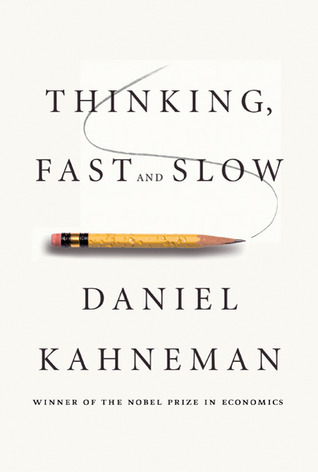
In the highly anticipated Thinking, Fast and Slow, Kahneman takes us on a groundbreaking tour of the mind and explains the two systems that drive the way we think. System 1 is fast, intuitive, and emotional; System 2 is slower, more deliberative, and more logical. Kahneman exposes the extraordinary capabilities—and also the faults and biases—of fast thinking, and
reveals the pervasive influence of intuitive impressions on our thoughts and behavior. The impact of loss aversion and overconfidence on corporate strategies, the difficulties of predicting what will make us happy in the future, the challenges of properly framing risks at work and at home, the profound effect of cognitive biases on everything from playing the stock market to planning the next vacation—each of these can be understood only by knowing how the two systems work together to shape our judgments and decisions.
Engaging the reader in a lively conversation about how we think, Kahneman reveals where we can and cannot trust our intuitions and how we can tap into the benefits of slow thinking. He offers practical and enlightening insights into how choices are made in both our business and our personal lives—and how we can use different techniques to guard against the mental glitches that often get us into trouble. Thinking, Fast and Slow will transform the way you think about thinking.
“Your brain loves shortcuts, even when they lead you in the wrong direction.”
“Confidence is not always evidence of truth.”
“Slow thinking turns impulsive reactions into informed decisions.”
“We trust intuition far more than statistics deserve.”
Thinking, Fast and Slow
Nonfiction Reader
0:00
0:00
Show Podcast Text
Today’s episode is all about Thinking, Fast and Slow by Daniel Kahneman, a groundbreaking exploration of the human mind that completely reshaped modern psychology and behavioral economics.
At the heart of the book are two mental systems. System 1 is fast, emotional, and instinctive. It helps you react instantly, make snap judgments, and navigate everyday life without constant effort. System 2 is slower, analytical, and deliberate. It steps in when problems become difficult, unfamiliar, or require logic.
Kahneman argues that while these systems work together, they also create many of the mistakes we make every day. We trust first impressions too easily. We become overconfident in our predictions. We fear losses more than we value gains. And most importantly, we often believe we are rational when we are anything but.
One of the most fascinating ideas in the book is how predictable our irrationality actually is. From gambling habits to investing decisions, from job interviews to relationships, Kahneman shows how cognitive biases quietly shape our lives. Reviews of the book praise its ability to reveal the hidden flaws in human judgment, while some readers admit the depth and detail can feel overwhelming. Still, most agree the insights are unforgettable.
Thinking, Fast and Slow is not just a psychology book. It’s a mirror held up to the human mind. It challenges readers to question their instincts, slow down their thinking, and recognize how easily perception can become deception.
If you’ve ever wondered why smart people make bad decisions, this book delivers unforgettable answers.