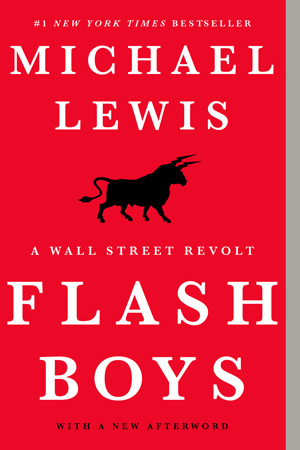
In Michael Lewis’s game-changing bestseller, a small group of Wall Street iconoclasts realize that the U.S. stock market has been rigged for the benefit of insiders. They band together—some of them walking away from seven-figure salaries—to investigate, expose, and reform the insidious new ways that Wall Street generates profits. If you have any contact with the
“The market moved fastest for those already controlling the game.”
“Speed became the ultimate weapon on Wall Street.”
“Transparency terrified the people profiting from hidden advantages.”
“Flash Boys exposes a system designed to outpace ordinary investors.”
Flash Boys
Nonfiction Reader
0:00
0:00
Show Podcast Text
Today we’re diving into Flash Boys by Michael Lewis, a gripping investigation into the hidden world of high-frequency trading and the technology race transforming the American stock market.
At first glance, the stock market seems straightforward. Investors buy and sell shares, prices rise and fall, and trades happen instantly. But Flash Boys reveals a shadow system operating in fractions of a second, where powerful firms use lightning-fast computers and secretive algorithms to gain an edge over ordinary investors.
The heart of the story follows Brad Katsuyama, a trader at the Royal Bank of Canada who notices something strange. Every time he tries to buy stocks, the prices suddenly jump before his order completes. That mystery leads him into the hidden world of high-frequency traders, dark pools, and fiber-optic networks built purely to shave milliseconds off trading times.
Readers praised Lewis for turning a complicated financial topic into a fast-paced narrative filled with unforgettable characters. Many reviewers admitted they knew nothing about high-frequency trading before reading the book, yet still found themselves completely absorbed by the investigation. Lewis explains difficult concepts with clarity, making readers feel as if they’ve uncovered a secret hidden beneath modern finance.
One of the book’s most fascinating elements is the creation of IEX, a new exchange designed to slow trading down just enough to prevent predatory tactics. For Katsuyama and his team, the mission became larger than profits. It was about fairness, transparency, and rebuilding trust in the market itself.
Critics argued that Lewis simplified some aspects of the debate and painted high-frequency traders as villains too neatly. Still, even skeptical readers admitted the book raises serious questions about who truly benefits from modern financial systems.
Flash Boys is ultimately a story about speed, power, and the invisible forces shaping every investor’s future.