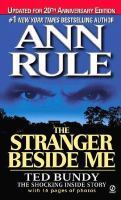
Utterly unique in its astonishing intimacy, as jarringly frightening as when it first appeared, Ann Rule’s The Stranger Beside Me defies our expectation that we would surely know if a monster lived among us, worked alongside of us, appeared as one of us. With a slow chill that intensifies with each heart-pounding page, Rule describes her dawning awareness that Ted
Bundy, her sensitive coworker on a crisis hotline, was one of the most prolific serial killers in America. He would confess to killing at least thirty-six young women from coast to coast, and was eventually executed for three of those cases. Drawing from their correspondence that endured until shortly before Bundy’s death, and striking a seamless balance between her deeply personal perspective and her role as a crime reporter on the hunt for a savage serial killer — the brilliant and charismatic Bundy, the man she thought she knew — Rule changed the course of true-crime literature with this unforgettable chronicle.
“Monsters rarely look monstrous when they stand beside us.”
“Ted Bundy weaponized charm more effectively than fear.”
“Ann Rule’s greatest shock was realizing evil could feel familiar.”
“The most dangerous predators often hide behind ordinary smiles.”
The Stranger Beside Me
Nonfiction Reader
0:00
0:00
Show Podcast Text
Today we’re exploring one of the most chilling and influential true crime books ever written: The Stranger Beside Me by Ann Rule. More than a story about serial killer Ted Bundy, this book is a haunting examination of trust, manipulation, and the terrifying reality that evil can exist behind a friendly face.
Ann Rule wasn’t just reporting on Bundy’s crimes. She knew him personally. Before he became one of America’s most notorious serial killers, Bundy worked alongside Rule at a Seattle crisis hotline. She remembered him as intelligent, compassionate, funny, and deeply attentive to people in pain. While young women across several states were disappearing and being murdered, Rule struggled to believe the suspect could possibly be the man she considered a friend.
That emotional conflict gives this book its unforgettable power. Rule writes not only as a journalist, but as someone forced to confront the collapse of her own judgment. The deeper investigators dug into Bundy’s crimes, the more impossible it became to separate the charming law student from the calculating predator hiding beneath the surface.
The Stranger Beside Me also changed true crime literature forever. Instead of focusing only on violence and investigation, Rule examined the psychology of charisma and deception. Bundy didn’t appear monstrous. He looked trustworthy, educated, even comforting. That contradiction disturbed readers then, and it still does today.
What makes the book especially compelling is Rule’s honesty about her own denial. She admits how desperately she wanted to believe Bundy was innocent, even while evidence mounted against him. Her vulnerability reminds readers that manipulation works precisely because predators know how to appear human.
In the end, The Stranger Beside Me is more than a crime story. It’s a warning about appearances, a study of psychopathy, and a deeply personal account of betrayal. Thanks for listening, and we’ll see you next time on nonfiction reader.