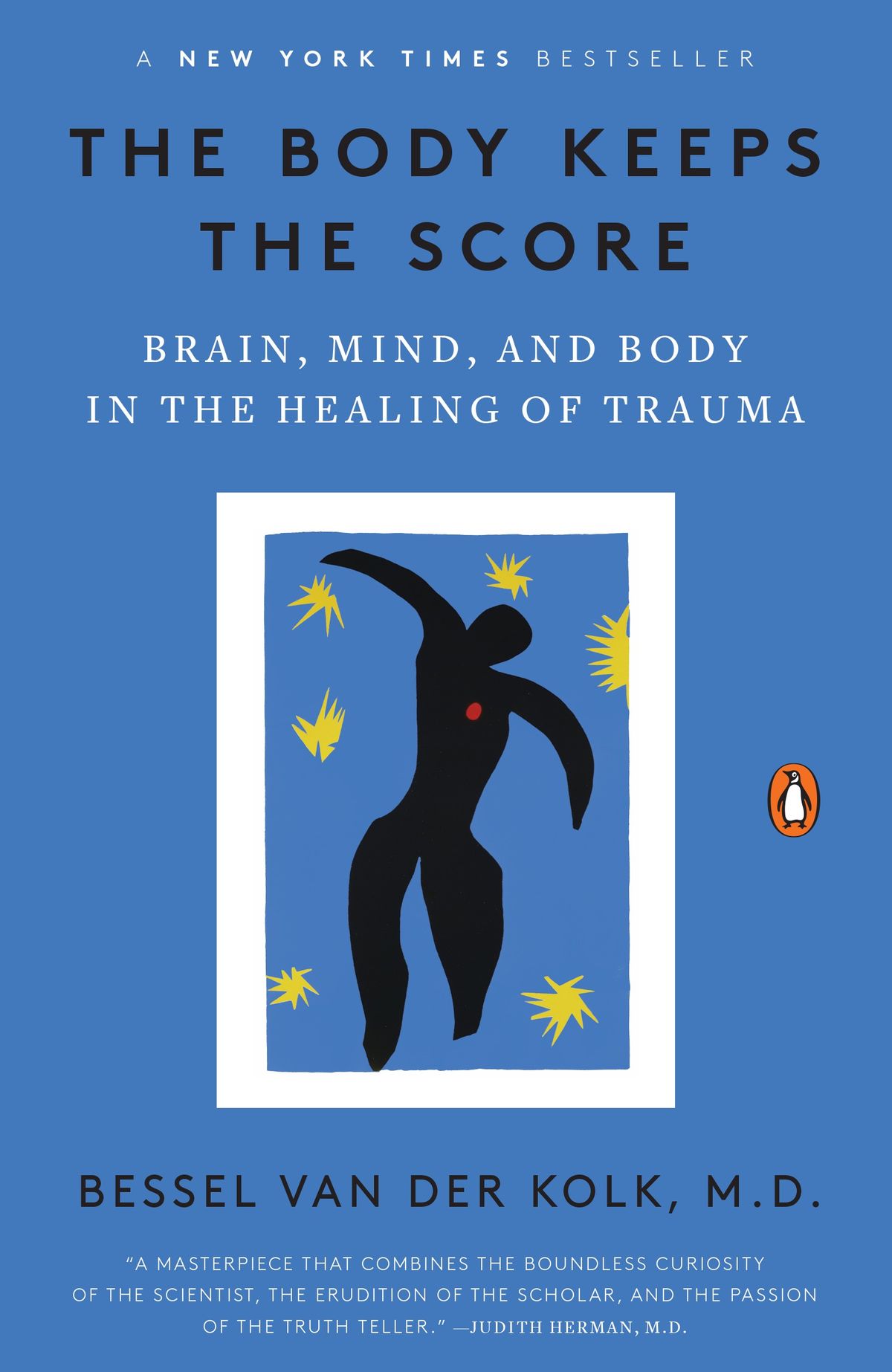
A pioneering researcher transforms our understanding of trauma and offers a bold new paradigm for healing. Trauma is a fact of life. Veterans and their families deal with the painful aftermath of combat; one in five Americans has been molested; one in four grew up with alcoholics; one in three couples have engaged in physical violence. Dr. Bessel van der Kolk,
one of the world’s foremost experts on trauma, has spent over three decades working with survivors. In The Body Keeps the Score, he uses recent scientific advances to show how trauma literally reshapes both body and brain, compromising sufferers’ capacities for pleasure, engagement, self-control, and trust. He explores innovative treatments—from neurofeedback and meditation to sports, drama, and yoga—that offer new paths to recovery by activating the brain’s natural neuroplasticity. Based on Dr. van der Kolk’s own research and that of other leading specialists, The Body Keeps the Score exposes the tremendous power of our relationships both to hurt and to heal—and offers new hope for reclaiming lives.
“Trauma reshapes both body and brain in ways many people never recognize.”
“Healing begins when the body finally feels safe again.”
“The book challenges traditional ideas about trauma treatment and recovery.”
“Recovery is not forgetting the past, but reconnecting with yourself.”
The Body Keeps the Score
Nonfiction Reader
0:00
0:00
Show Podcast Text
Today we’re exploring The Body Keeps the Score by Bessel van der Kolk, a groundbreaking and deeply debated book about trauma, memory, and healing. For decades, trauma was often understood only through emotional symptoms, but this book argues something far more profound: trauma lives in the body itself.
Drawing from neuroscience, psychology, and years of clinical work, van der Kolk explains how traumatic experiences can reshape the brain, disrupt relationships, and affect physical health. He explores how survivors may struggle with anxiety, chronic pain, emotional numbness, or an inability to feel safe, even long after the original events have passed.
What makes this book stand out is its focus on healing beyond traditional talk therapy. Van der Kolk discusses treatments like EMDR, mindfulness, yoga, neurofeedback, and body-centered therapies designed to reconnect people with themselves. Many readers describe the book as transformative, saying it changed how they understand trauma, mental health, and even human behavior itself.
At the same time, the book has sparked criticism. Some readers question whether every treatment discussed is fully supported by scientific evidence, while others felt uncomfortable with parts of the author’s storytelling and clinical examples. Those critiques have made the conversation around this book even more complex and important.
Still, The Body Keeps the Score remains one of the most influential books ever written on trauma. Whether you see it as revolutionary, controversial, or both, it challenges us to rethink how pain shapes our lives — and how recovery may require healing both mind and body together.