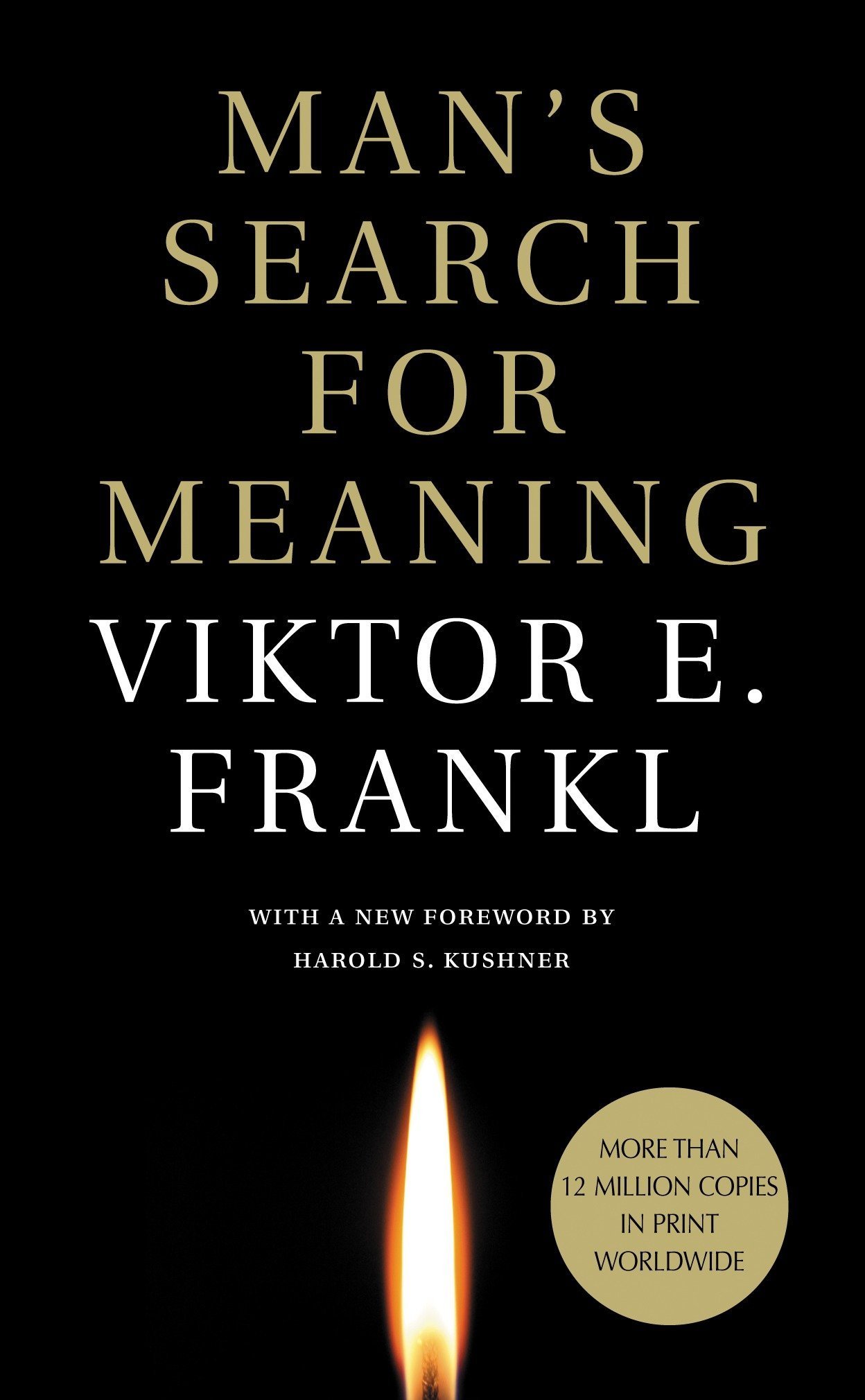
Viktor E. Frankl, Harold S. Kushner, William J. Winslade, Isle Lasch
Psychiatrist Viktor Frankl’s memoir has riveted generations of readers with its descriptions of life in Nazi death camps and its lessons for spiritual survival. Based on his own experience and the stories of his patients, Frankl argues that we cannot avoid suffering but we can choose how to cope with it, find meaning in it, and move forward with renewed purpose.
At the heart of his theory, known as logotherapy, is a conviction that the primary human drive is not pleasure but the pursuit of what we find meaningful. Man’s Search for Meaning has become one of the most influential books in America; it continues to inspire us all to find significance in the very act of living.
“Meaning can survive even in humanity’s darkest moments.”
“Freedom begins with choosing our response to suffering.”
“Hope became an act of resistance inside the concentration camps.”
“Purpose gives people strength when everything else is stripped away.”
Man’s Search for Meaning
Nonfiction Reader
0:00
0:00
Show Podcast Text
Today, we’re exploring one of the most influential and deeply moving books ever written, Man’s Search for Meaning by Viktor Frankl.
Part memoir, part psychological study, the book draws from Frankl’s horrifying experiences inside Nazi concentration camps during World War II. But this is not simply a story about suffering. It’s a story about survival, resilience, and the search for purpose when everything familiar has been destroyed.
Frankl, a psychiatrist, observed that prisoners who could hold onto meaning were often the ones most capable of enduring unimaginable conditions. For some, meaning came from love. For others, it came from unfinished work, faith, or the hope of reunion with family. Frankl himself survived by imagining conversations with his wife and by believing his ideas still mattered.
What makes this book remarkable is its refusal to surrender to despair. Frankl argues that while people cannot always control their circumstances, they can control how they respond to them. That belief became the foundation of his psychological approach known as logotherapy, centered on humanity’s drive to find meaning rather than pleasure or power.
Readers continue to debate the book’s second half, where Frankl explains his theories in more clinical detail. Some find it profound and life-changing, while others connect more strongly with the emotional power of the memoir itself. Still, the central message remains unforgettable.
In a world filled with uncertainty, Frankl reminds us that meaning is not handed to us. It’s something we create through courage, responsibility, love, and perseverance.