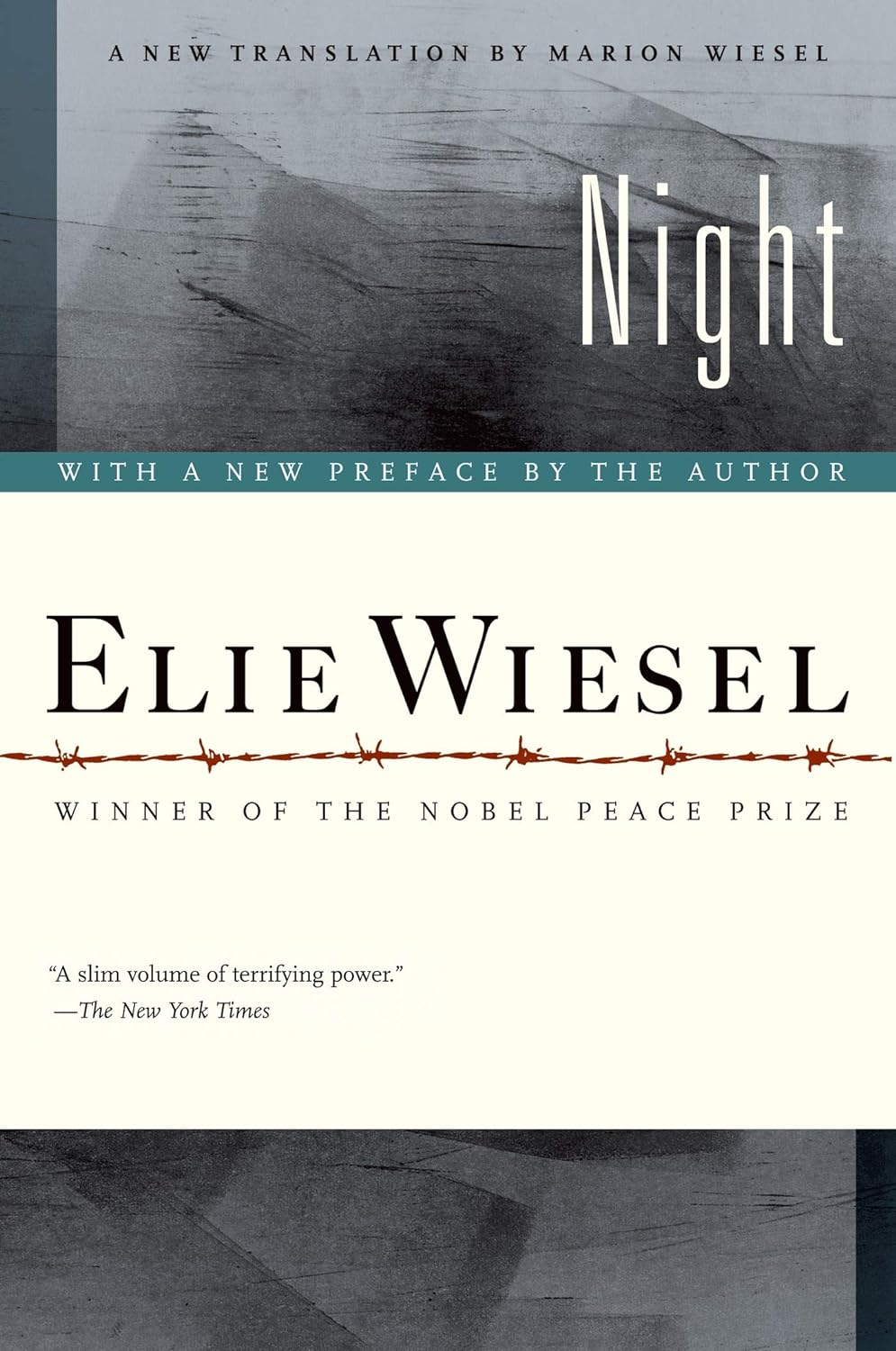
Born in the town of Sighet, Transylvania, Elie Wiesel was a teenager when he and his family were taken from their home in 1944 to Auschwitz concentration camp, and then to Buchenwald. Night is the terrifying record of Elie Wiesel’s memories of the death of his family, the death of his own innocence, and his despair as a deeply observant Jew confronting the absolute
evil of man. This new translation by his wife and most frequent translator, Marion Wiesel, corrects important details and presents the most accurate rendering in English of Elie Wiesel’s testimony to what happened in the camps and of his unforgettable message that this horror must simply never be allowed to happen again.
“Night forces readers to confront both human cruelty and human endurance.”
“Silence and indifference allowed unimaginable suffering to grow unchecked.”
“Elie Wiesel transformed personal tragedy into a universal warning for humanity.”
“Memory becomes an act of resistance against forgetting.”
Night
Nonfiction Reader
0:00
0:00
Show Podcast Text
Today we’re discussing Night, the devastating and unforgettable memoir by Elie Wiesel. First published in 1956, Night remains one of the most powerful firsthand accounts of the Holocaust ever written.
The memoir begins in Sighet, Transylvania, where Elie is a deeply religious teenager living with his family and studying Jewish mysticism. But in 1944, everything changes when the Nazis deport the Jewish community to Auschwitz. From there, Elie and his father are transferred between concentration camps, including Buchenwald, enduring starvation, brutality, forced labor, and the constant presence of death.
What makes Night so haunting is its simplicity. Wiesel doesn’t rely on dramatic language or exaggerated emotion. Instead, he presents horrific events with calm honesty, which somehow makes them even more painful to absorb. Readers witness not only the destruction of families and lives, but also the destruction of innocence, faith, and humanity itself.
Night forces readers to confront both human cruelty and human endurance. Elie struggles with questions about God, morality, and survival as he watches suffering unfold around him. His bond with his father becomes one of the emotional centers of the memoir, representing both love and responsibility in unimaginable circumstances.
Silence and indifference allowed unimaginable suffering to grow unchecked. Memory becomes an act of resistance against forgetting. Elie Wiesel transformed personal tragedy into a universal warning for humanity.
More than a historical account, Night is a moral testimony. It reminds us that hatred, prejudice, and indifference can lead to catastrophic consequences when left unchallenged. Even decades later, Wiesel’s words continue to demand remembrance, compassion, and responsibility from every generation.