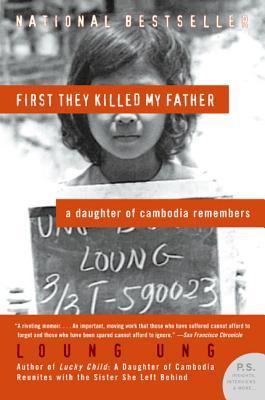
From a childhood survivor of the Cambodian genocide under the regime of Pol Pot, this is a riveting narrative of war crimes and desperate actions, the unnerving strength of a small girl and her family, and their triumph of spirit. One of seven children of a high-ranking government official, Loung Ung lived a privileged life in the Cambodian capital of Phnom Penh
until the age of five. Then, in April 1975, Pol Pot’s Khmer Rouge army stormed into the city, forcing Ung’s family to flee and, eventually, to disperse. Loung was trained as a child soldier in a work camp for orphans, her siblings were sent to labor camps, and those who survived the horrors would not be reunited until the Khmer Rouge was destroyed.
Harrowing yet hopeful, Loung’s powerful story is an unforgettable account of a family shaken and shattered, yet miraculously sustained by courage and love in the face of unspeakable brutality.
“History becomes unforgettable when witnessed through the eyes of a frightened child.”
“Survival demanded courage no child should ever have to discover.”
“The memoir transforms statistics into deeply human heartbreak.”
“Loung Ung’s story reminds us why remembering genocide matters.”
First They Killed My Father
Nonfiction Reader
0:00
0:00
Show Podcast Text
Today, we’re discussing First They Killed My Father, the unforgettable memoir by Loung Ung, a survivor of the Cambodian genocide under the Khmer Rouge regime. This deeply personal account reveals the horrors of war and political violence through the eyes of a child, making history feel immediate, intimate, and impossible to ignore.
Loung Ung was only five years old when her life in Phnom Penh changed forever. Before the Khmer Rouge seized power in 1975, her family lived comfortably in Cambodia’s capital. But almost overnight, they were forced from their home, separated from one another, and pushed into brutal labor camps where starvation, fear, and violence became everyday realities. As the regime tightened its grip, Loung endured unimaginable trauma, including the loss of family members, military training as a child soldier, and the constant struggle to survive.
What makes this memoir so powerful is its perspective. Loung recounts events with the emotional clarity of a child trying to understand cruelty far beyond her years. Readers experience confusion, terror, grief, and even flashes of hope alongside her. Many reviewers describe the book as heartbreaking, haunting, and emotionally exhausting, yet essential reading because it transforms overwhelming historical tragedy into a human story of resilience.
The memoir also serves as an important reminder about the dangers of extremism, propaganda, and silence. Several readers reflected on how little they previously understood about the Cambodian genocide until hearing Loung’s voice directly. Her story forces us to confront the devastating consequences of hatred and political fanaticism.
Despite its harrowing subject matter, First They Killed My Father ultimately becomes a testament to survival, memory, and the enduring strength of the human spirit. Loung Ung’s courage in sharing her story ensures these lives and losses will never be forgotten.