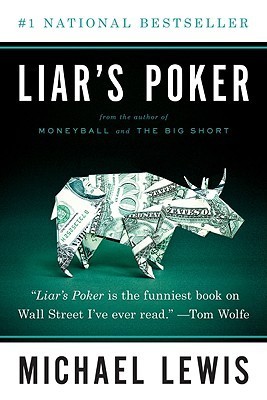
The time was the 1980s. The place was Wall Street. The game was called Liar’s Poker. Michael Lewis was fresh out of Princeton and the London School of Economics when he landed a job at Salomon Brothers, one of Wall Street’s premier investment firms. During the next three years, Lewis rose from callow trainee to bond salesman, raking in millions
for the firm and cashing in on a modern-day gold rush. Liar’s Poker is the culmination of those heady, frenzied years—a behind-the-scenes look at a unique and turbulent time in American business. From the frat-boy camaraderie of the forty-first-floor trading room to the killer instinct that made ambitious young men gamble everything on a high-stakes game of bluffing and deception, here is Michael Lewis’s knowing and hilarious insider’s account of an unprecedented era of greed, gluttony, and outrageous fortune. .
“Wall Street rewarded confidence long before it rewarded wisdom.”
“Greed sounded glamorous until the bill finally arrived.”
“The trading floor ran on adrenaline, ego, and enormous amounts of money.”
“Liar’s Poker exposed finance as performance disguised as expertise.”
Liar’s Poker
Nonfiction Reader
0:00
0:00
Show Podcast Text
Today we’re diving into Michael Lewis’s unforgettable Wall Street memoir, Liar’s Poker, a sharp, funny, and unsettling look at the excesses of 1980s finance culture. Before Lewis became famous for books like The Big Short and Moneyball, he was a young bond salesman at Salomon Brothers, one of the most powerful investment banks in America. What he witnessed there became the foundation for this explosive insider story.
Liar’s Poker captures a world driven by ambition, testosterone, and staggering amounts of money. On the Salomon trading floor, success depended less on wisdom and more on nerve, swagger, and the ability to sell almost anything to anyone. Lewis walks readers through a culture filled with giant bonuses, reckless risks, and traders known as “Big Swinging Dicks,” whose confidence often mattered more than competence.
What makes the book remarkable is its tone. Lewis doesn’t just condemn Wall Street; he exposes it with humor and disbelief. He shows how mortgage bonds and complex financial products transformed investing into a high-stakes casino, while executives and traders convinced themselves they were masters of the universe. Decades later, many readers see Liar’s Poker as an eerie preview of the financial crises still to come.
The memoir also reveals something timeless about institutions built on greed. Behind the bravado were insecure people chasing status, terrified of falling behind. Lewis understood that Wall Street wasn’t only about money; it was about performance, image, and survival inside a brutal culture.
In the end, Liar’s Poker remains essential reading because it pulls back the curtain on modern finance with honesty and wit. It’s hilarious, disturbing, and surprisingly human.