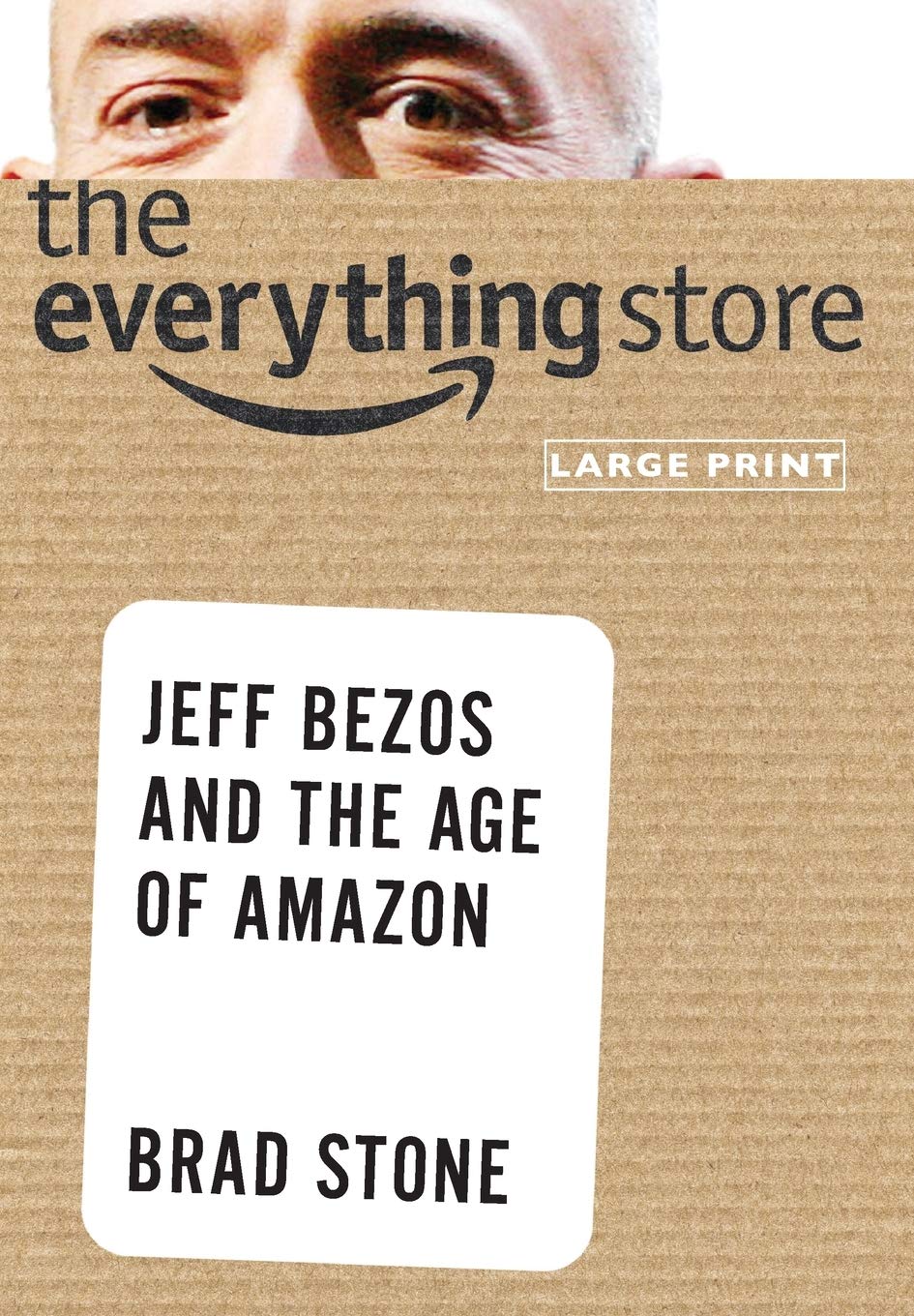
The definitive story of Amazon.com, one of the most successful companies in the world, and of its driven, brilliant founder, Jeff Bezos. Amazon.com started off delivering books through the mail. But its visionary founder, Jeff Bezos, wasn’t content with being a bookseller. He wanted Amazon to become the everything store, offering limitless selection and seductive
convenience at disruptively low prices. To do so, he developed a corporate culture of relentless ambition and secrecy that’s never been cracked. Until now. Brad Stone enjoyed unprecedented access to current and former Amazon employees and Bezos family members, giving readers the first in-depth, fly-on-the-wall account of life at Amazon. Compared to tech’s other elite innovators–Jobs, Gates, Zuckerberg–Bezos is a private man. But he stands out for his restless pursuit of new markets, leading Amazon into risky new ventures like the Kindle and cloud computing, and transforming retail in the same way Henry Ford revolutionized manufacturing.
The Everything Store will be the revealing, definitive biography of the company that placed one of the first and largest bets on the Internet and forever changed the way we shop and read.
“Amazon wasn’t built to follow retail rules, but to rewrite them entirely.”
“Jeff Bezos treated customer obsession like a competitive weapon.”
“Convenience became Amazon’s superpower and its moral dilemma.”
“The Everything Store reveals innovation fueled by relentless ambition.”
The Everything Store
Nonfiction Reader
0:00
0:00
Show Podcast Text
Today we’re diving into The Everything Store, the fascinating behind-the-scenes story of how Amazon transformed from an online bookstore into one of the most influential companies in the world. Written by Brad Stone, this book explores the vision, intensity, and controversy surrounding founder Jeff Bezos.
What makes this story so compelling is that it’s not just about business success. It’s about obsession. Bezos believed customers should get the lowest prices, the fastest shipping, and the widest selection imaginable. That mindset pushed Amazon to reinvent industries ranging from publishing to cloud computing. The company wasn’t satisfied selling books. It wanted to become the “everything store.”
The book paints Bezos as both visionary and ruthless. Former employees describe a demanding workplace fueled by impossible standards, endless meetings, and brutal honesty. Some admired the culture’s relentless drive, while others saw it as exhausting and unforgiving. Yet even critics admitted Bezos possessed an extraordinary ability to predict where technology and consumer behavior were heading next.
One of the most interesting themes in the book is Amazon’s relationship with power. As the company grew, so did concerns about how it treated suppliers, competitors, and even its own workers. The same innovations customers loved often created fear across entire industries. Independent bookstores disappeared. Publishers lost leverage. Rivals struggled to compete against Amazon’s scale and data-driven precision.
Still, the story remains undeniably gripping because Amazon changed how the modern world shops, reads, and consumes information. The Everything Store isn’t just a biography of a company. It’s a portrait of ambition in the internet age, showing how one relentless idea reshaped global commerce forever.