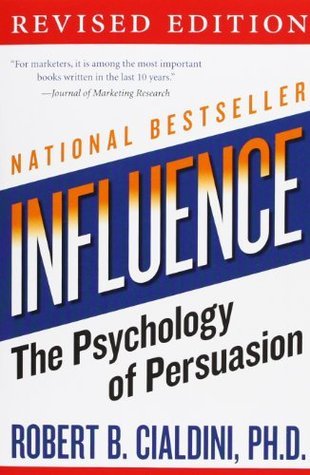
Influence, the classic book on persuasion, explains the psychology of why people say “yes”—and how to apply these understandings. Dr. Robert Cialdini is the seminal expert in the rapidly expanding field of influence and persuasion. His thirty-five years of rigorous, evidence-based research along with a three-year program of study on what moves people to change behavior
You’ll learn the six universal principles, how to use them to become a skilled persuader—and how to defend yourself against them. Perfect for people in all walks of life, the principles of Influence will move you toward profound personal change and act as a driving force for your success.
“Persuasion often succeeds before we realize a decision was already forming.”
“Scarcity makes ordinary things feel suddenly irresistible.”
“Authority shapes behavior more powerfully than most people admit.”
“The smartest persuasion begins with understanding human nature.”
Influence
Nonfiction Reader
0:00
0:00
Show Podcast Text
Today we’re diving into Influence by Dr. Robert Cialdini, a groundbreaking exploration of persuasion and the hidden psychology behind why people say yes. Decades after its release, this book still shapes marketing, leadership, negotiation, and even everyday conversations.
What makes Influence so powerful is that Cialdini doesn’t rely on vague motivational advice. Instead, he breaks persuasion into clear psychological principles backed by research, experiments, and real-world examples. The result feels less like theory and more like learning the operating system behind human behavior.
The book introduces six major principles of influence: reciprocity, commitment and consistency, social proof, liking, authority, and scarcity. Each one reveals how quickly our decisions can be guided by subtle emotional triggers. A free sample creates obligation. A crowded restaurant suddenly seems better. A limited-time offer feels impossible to ignore.
One of the most fascinating ideas is how automatic many of our responses are. Cialdini describes moments where people react almost mechanically, relying on mental shortcuts to save time and energy. Those shortcuts help us survive busy lives, but they also leave us vulnerable to manipulation from advertisers, salespeople, and even political systems.
Yet the book never feels cynical. Instead, it encourages awareness. Cialdini wants readers not only to persuade more effectively, but also to recognize when persuasion is being used against them.
What keeps Influence relevant is its balance between science and storytelling. The experiments are memorable, the examples are surprisingly relatable, and the lessons apply everywhere from boardrooms to friendships.
Influence ultimately reminds us that understanding people is one of the most valuable skills we can develop. And once you recognize these patterns, you start seeing them everywhere.