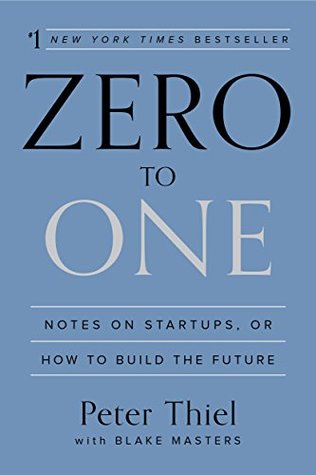
If you want to build a better future, you must believe in secrets. The great secret of our time is that there are still uncharted frontiers to explore and new inventions to create. In Zero to One, legendary entrepreneur and investor Peter Thiel shows how we can find singular ways to create those new things. Thiel begins with the contrarian premise that we
live in an age of technological stagnation, even if we’re too distracted by shiny mobile devices to notice. Information technology has improved rapidly, but there is no reason why progress should be limited to computers or Silicon Valley. Progress can be achieved in any industry or area of business. It comes from the most important skill that every leader must master: learning to think for yourself.
Doing what someone else already knows how to do takes the world from 1 to n, adding more of something familiar. But when you do something new, you go from 0 to 1. The next Bill Gates will not build an operating system. The next Larry Page or Sergey Brin won’t make a search engine. Tomorrow’s champions will not win by competing ruthlessly in today’s marketplace. They will escape competition altogether, because their businesses will be unique.
Zero to One presents at once an optimistic view of the future of progress in America and a new way of thinking about innovation: it starts by learning to ask the questions that lead you to find value in unexpected places.
“Great businesses begin with questions nobody else is asking.”
“The future belongs to creators, not imitators.”
“Innovation starts when someone challenges accepted assumptions.”
Zero to One
Nonfiction Reader
0:00
0:00
Show Podcast Text
Today we’re diving into Zero to One, a bold and controversial exploration of innovation, startups, and the future of business. Written by entrepreneur and investor Peter Thiel, the book challenges one of the most common assumptions in modern business: that competition is healthy. Thiel argues the opposite. According to him, the most successful companies don’t compete directly at all. They create something entirely unique.
The title itself captures the core idea. Going from one to many means copying what already works. Going from zero to one means creating something truly original. Thiel believes progress only happens when entrepreneurs discover hidden opportunities others overlook. Great businesses begin with questions nobody else is asking.
Throughout the book, Thiel mixes practical startup advice with strong opinions about technology, education, monopolies, and innovation. Some readers praise the book for its sharp insights into building companies, hiring teams, and developing long-term strategies. Others criticize its contrarian tone and sweeping claims about competition and society. But even critics admit the book sparks debate and forces readers to rethink familiar ideas.
One of the strongest themes is the importance of independent thinking. Thiel repeatedly argues that following trends rarely creates breakthroughs. The future belongs to creators, not imitators. He encourages entrepreneurs to search for “secrets” — truths about the world that few people recognize yet.
Whether you see Zero to One as visionary or provocative, it remains one of the most discussed business books of the modern startup era. Innovation starts when someone challenges accepted assumptions, and this book certainly does exactly that.