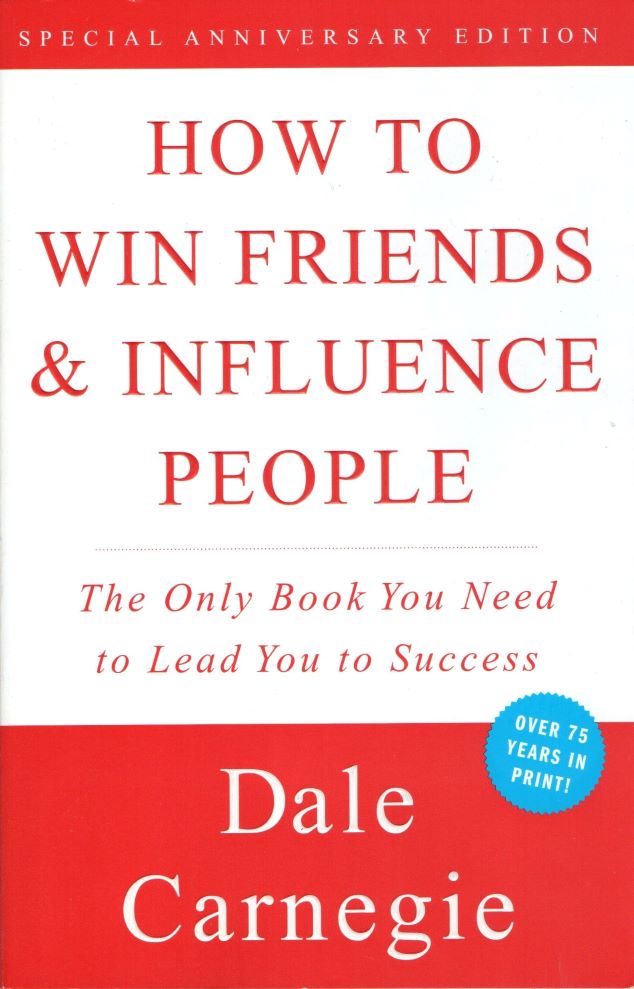
You can go after the job you want…and get it! You can take the job you have…and improve it! You can take any situation you’re in…and make it work for you! Since its release in 1936, How to Win Friends and Influence People has sold more than 30 million copies. Dale Carnegie’s first book is a timeless bestseller, packed with rock-solid advice that has carried
thousands of now famous people up the ladder of success in their business and personal lives.
As relevant as ever before, Dale Carnegie’s principles endure, and will help you achieve your maximum potential in the complex and competitive modern age.
Learn the six ways to make people like you, the twelve ways to win people to your way of thinking, and the nine ways to change people without arousing resentment.
“People respond better to appreciation than criticism.”
“Influence begins with genuine interest in other people.”
“The strongest communicators make others feel valued and understood.”
“Kindness and empathy are powerful tools in human relationships.”
How to Win Friends and Influence People
Nonfiction Reader
0:00
0:00
Show Podcast Text
Today we’re exploring How to Win Friends and Influence People by Dale Carnegie, one of the most influential self-help books ever written. First published in 1936, this classic has sold millions of copies and continues to shape conversations about communication, leadership, and human relationships.
At its core, Carnegie’s message is surprisingly simple: people want to feel respected, heard, and appreciated. The book offers practical advice on how to improve social interactions, build trust, and persuade others without hostility or conflict. Influence begins with genuine interest in other people. Carnegie argues that remembering names, listening carefully, avoiding harsh criticism, and offering sincere praise can dramatically improve both personal and professional relationships.
Many readers praise the book for its timeless communication strategies. Even decades later, its lessons about empathy and emotional intelligence remain relevant in workplaces, friendships, and everyday life. The strongest communicators make others feel valued and understood. Carnegie repeatedly emphasizes that successful interactions depend less on winning arguments and more on understanding human emotions.
At the same time, the book has its critics. Some readers feel the techniques can sound manipulative or overly agreeable, especially when taken to extremes. Others argue that constant friendliness and praise may create shallow relationships rather than authentic connection. Still, supporters counter that Carnegie’s advice works best when practiced sincerely rather than mechanically.
What makes the book endure is its focus on emotional awareness. Carnegie reminds readers that people are rarely driven by pure logic. Instead, they respond to recognition, respect, and kindness. People respond better to appreciation than criticism. Whether you see the book as a guide to leadership, networking, or self-improvement, its influence on modern communication is undeniable.
Ultimately, How to Win Friends and Influence People encourages readers to approach others with empathy, patience, and understanding. Kindness and empathy are powerful tools in human relationships.