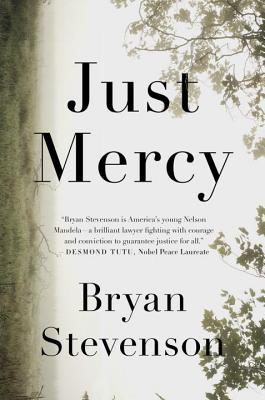
An unforgettable true story about the potential for mercy to redeem us, and a clarion call to end mass incarceration in America — from one of the most inspiring lawyers of our time. Bryan Stevenson was a young lawyer when he founded the Equal Justice Initiative, a nonprofit law office in Montgomery, Alabama, dedicated to defending the poor, the incarcerated, and
Just Mercy tells the story of EJI, from the early days with a small staff facing the nation’s highest death sentencing and execution rates, through a successful campaign to challenge the cruel practice of sentencing children to die in prison, to revolutionary projects designed to confront Americans with our history of racial injustice.
One of EJI’s first clients was Walter McMillian, a young Black man who was sentenced to die for the murder of a young white woman that he didn’t commit. The case exemplifies how the death penalty in America is a direct descendant of lynching — a system that treats the rich and guilty better than the poor and innocent.
“Justice means little when innocence depends on wealth, race, or power.”
“Mercy begins when we recognize the humanity in every person.”
“The book exposes how deeply injustice is woven into the legal system.”
“Hope survives because people like Bryan Stevenson refuse to stop fighting.”
Just Mercy
Nonfiction Reader
0:00
0:00
Show Podcast Text
Today we’re discussing Just Mercy by Bryan Stevenson, a powerful memoir that confronts injustice, racism, and the human cost of America’s criminal justice system.
The book follows Stevenson’s journey as a young lawyer founding the Equal Justice Initiative in Alabama, where he dedicated his career to defending poor prisoners, children sentenced as adults, and people wrongly condemned to death. At the heart of the story is Walter McMillian, a Black man falsely accused of murdering a white woman and sentenced to death despite overwhelming evidence of his innocence.
What makes Just Mercy so compelling is the way Stevenson combines legal storytelling with deep compassion. Readers describe the book as heartbreaking, eye-opening, and impossible to forget. Through case after case, Stevenson reveals how poverty, racism, trauma, and politics often shape outcomes in courtrooms more than truth or fairness.
The book also challenges readers to rethink punishment itself. Stevenson argues that people are more than the worst thing they have ever done, and that mercy is essential to real justice. His calm, thoughtful writing gives emotional weight to stories of prisoners, families, and children trapped inside a deeply flawed system.
Many readers call this book life-changing because it transforms statistics into human stories. It exposes the realities of mass incarceration, the death penalty, and racial inequality while still offering hope through Stevenson’s persistence and humanity.
Just Mercy is not simply a memoir about the law. It is a call to empathy, accountability, and reform — a reminder that justice cannot exist without compassion.