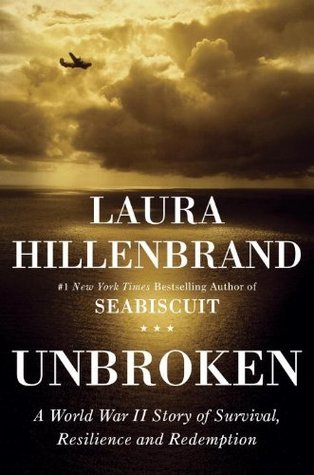
On a May afternoon in 1943, an Army Air Forces bomber crashed into the Pacific Ocean and disappeared, leaving only a spray of debris and a slick of oil, gasoline, and blood. Then, on the ocean surface, a face appeared. It was that of a young lieutenant, the plane’s bombardier, who was struggling to a life raft and pulling himself aboard. So began one of the most
The lieutenant’s name was Louis Zamperini. In boyhood, he’d been a cunning and incorrigible delinquent, breaking into houses, brawling, and fleeing his home to ride the rails. As a teenager, he had channeled his defiance into running, discovering a prodigious talent that had carried him to the Berlin Olympics and within sight of the four-minute mile. But when war had come, the athlete had become an airman, embarking on a journey that led to his doomed flight, a tiny raft, and a drift into the unknown.
Ahead of Zamperini lay thousands of miles of open ocean, leaping sharks, a foundering raft, thirst and starvation, enemy aircraft, and, beyond, a trial even greater. Driven to the limits of endurance, Zamperini would answer desperation with ingenuity; suffering with hope, resolve, and humor; brutality with rebellion. His fate, whether triumph or tragedy, would be suspended on the fraying wire of his will.
“Resilience becomes humanity’s greatest weapon against despair.”
“Louis Zamperini survived brutality through courage, humor, and relentless determination.”
“War reveals both humanity’s cruelty and its astonishing strength.”
“Forgiveness becomes the final victory in an unimaginable journey.”
Unbroken
Nonfiction Reader
0:00
0:00
Show Podcast Text
Today we’re discussing Unbroken by Laura Hillenbrand, the extraordinary true story of Louis Zamperini — an Olympic athlete, World War II airman, prisoner of war, and survivor of one of the most harrowing journeys of the twentieth century.
The book begins with Zamperini’s troubled childhood. As a boy, he was rebellious and constantly in trouble, but his older brother recognized his potential and pushed him toward running. That decision transformed his life. Zamperini became a record-breaking track star and eventually competed in the 1936 Berlin Olympics, where even Adolf Hitler reportedly noticed his remarkable speed.
But the heart of Unbroken begins during World War II. After serving as a bombardier in the Pacific, Zamperini survives a devastating plane crash and drifts across the ocean for weeks on a tiny life raft. Facing starvation, dehydration, sharks, and enemy attacks, he somehow refuses to surrender. Resilience becomes humanity’s greatest weapon against despair.
Eventually captured by Japanese forces, Zamperini endures brutal treatment in prisoner-of-war camps, especially under the sadistic guard known as “The Bird.” The book’s descriptions of suffering are intense and deeply unsettling, revealing the unimaginable cruelty many POWs faced during the war. Yet the story never loses sight of Zamperini’s determination to survive. Louis Zamperini survived brutality through courage, humor, and relentless determination.
Readers and critics often praise Hillenbrand’s vivid storytelling and meticulous research, though some feel the narrative occasionally leans toward dramatization. Still, the emotional power of the story is undeniable. War reveals both humanity’s cruelty and its astonishing strength.
What ultimately elevates Unbroken beyond a survival story is Zamperini’s life after the war. Haunted by trauma and anger, he eventually discovers healing through forgiveness. Forgiveness becomes the final victory in an unimaginable journey.