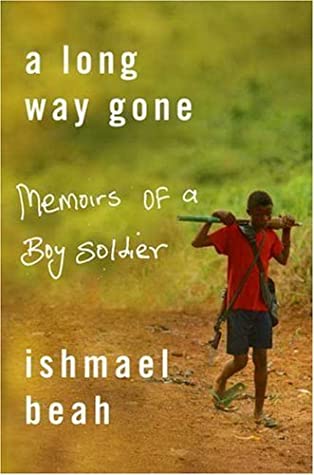
The devastating story of war through the eyes of a child soldier. Beah tells how, at the age of twelve, he fled attacking rebels and wandered a land rendered unrecognizable by violence. By thirteen, he’d been picked up by the government army, and became a soldier. My new friends have begun to suspect I haven’t told them the full story of my life. “Why did you
“You mean, you saw people running around with guns and shooting each other?”
“Yes, all the time.”
“Cool.”
I smile a little.
“You should tell us about it sometime.”
“Yes, sometime.”
This is how wars are fought now: by children, hopped-up on drugs and wielding AK-47s. Children have become soldiers of choice. In the more than fifty conflicts going on worldwide, it is estimated that there are some 300,000 child soldiers. Ishmael Beah used to be one of them.
What is war like through the eyes of a child soldier? How does one become a killer? How does one stop? Child soldiers have been profiled by journalists, and novelists have struggled to imagine their lives. But until now, there has not been a first-person account from someone who came through this hell and survived.
In A Long Way Gone, Beah, now twenty-five years old, tells a riveting story: how at the age of twelve, he fled attacking rebels and wandered a land rendered unrecognizable by violence. By thirteen, he’d been picked up by the government army, and Beah, at heart a gentle boy, found that he was capable of truly terrible acts.
This is a rare and mesmerizing account, told with real literary force and heartbreaking honesty.
“War stole childhood before Ishmael understood what childhood meant.”
“Violence became normal long before healing became possible.”
“Survival demanded choices no child should ever face.”
“Hope returned slowly, one human connection at a time.”
A Long Way Gone
Nonfiction Reader
0:00
0:00
Show Podcast Text
Today we’re discussing A Long Way Gone, Ishmael Beah’s unforgettable memoir about survival, loss, and the tragic reality of child soldiers during the civil war in Sierra Leone.
This is not simply a story about war. It is a story about how war dismantles innocence piece by piece. Beah begins as a twelve-year-old boy who loves rap music, soccer, and spending time with friends. But when rebel forces attack his village, his entire world collapses. Families scatter, villages burn, and fear becomes a constant companion.
As Ishmael wanders through the countryside searching for safety, the book captures the terrifying uncertainty civilians faced every day. Hunger, grief, and suspicion follow him everywhere. Eventually, the government army recruits him, and the memoir takes an even darker turn. The transformation from frightened child to armed soldier is heartbreaking. Drugs, violence, and revenge become part of daily life, until killing feels routine.
What makes A Long Way Gone so powerful is Ishmael’s honesty. He never asks readers for pity. Instead, he forces us to confront uncomfortable truths about war and human survival. Many reviewers praised the memoir for showing how easily children can be manipulated when fear and trauma replace stability and love.
But the story is also about recovery. Ishmael’s rehabilitation introduces another battle: learning how to live again after violence has reshaped his identity. Through compassion, patience, and human connection, he slowly begins reclaiming pieces of himself.
This memoir remains essential because it gives a voice to children trapped in conflicts around the world. A Long Way Gone is devastating, deeply human, and impossible to forget. Thanks for listening, and we’ll see you next time on nonfiction reader.