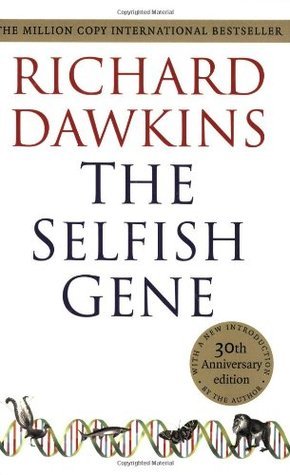
“The Selfish Gene” caused a wave of excitement among biologists and the general public when it was first published in 1976. Its vivid rendering of a gene’s eye view of life, in lucid prose, gathered together the strands of thought about the nature of natural selection into a conceptual framework with far-reaching implications for our understanding of evolution. Time
has confirmed its significance. Intellectually rigorous, yet written in non-technical language, “The Selfish Gene” is widely regarded as a masterpiece of science writing, and its insights remain as relevant today as on the day it was published.
“Genes build survival machines, and humans are their most complicated invention.”
“Altruism may hide selfish evolutionary strategies beneath acts of kindness.”
“Memes spread through culture like genes spread through biology.”
“Evolution explains behavior without stripping humanity of meaning.”
The Selfish Gene
Nonfiction Reader
0:00
0:00
Show Podcast Text
Today we’re diving into one of the most influential science books ever written: The Selfish Gene by Richard Dawkins.
First published in 1976, this groundbreaking book transformed how many people understand evolution. Dawkins takes a bold approach by shifting the focus away from individual organisms and placing genes at the center of natural selection. According to his argument, humans, animals, and every living thing are essentially “survival machines” built to help genes replicate and continue through generations.
Now, despite the provocative title, Dawkins is not saying people are doomed to selfishness. Instead, he explains how behaviors that appear generous or cooperative may still emerge from evolutionary strategies favoring genetic survival. The book explores aggression, family relationships, cooperation, and even morality through this fascinating lens.
One reason The Selfish Gene remains so popular is Dawkins’ writing style. Reviewers repeatedly praise how he explains difficult scientific concepts using humor, vivid metaphors, and accessible language. Even readers skeptical of evolution often admit the book is intellectually compelling and remarkably readable.
The book also introduced the world to the concept of the “meme,” which Dawkins described as a cultural replicator. Long before internet memes became everyday entertainment, Dawkins argued that ideas, habits, and cultural trends spread and evolve similarly to genes.
What makes this book endure is its ability to challenge readers philosophically as well as scientifically. It forces us to ask uncomfortable questions about free will, cooperation, and human nature itself. Are we truly independent thinkers, or are we deeply shaped by biological programming inherited across millions of years?
Whether you agree with Dawkins completely or not, The Selfish Gene remains a landmark work of science communication — provocative, insightful, and endlessly thought-provoking.