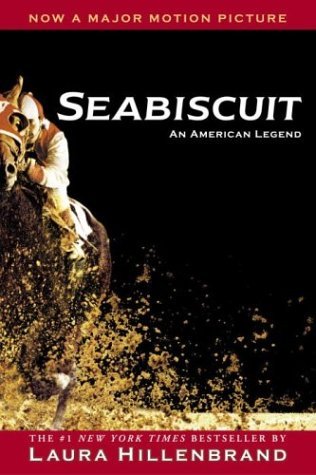
Seabiscuit was one of the most electrifying and popular attractions in sports history and the single biggest newsmaker in the world in 1938, receiving more coverage than FDR, Hitler, or Mussolini. But his success was a surprise to the racing establishment, which had written off the crooked-legged racehorse with the sad tail. Three men changed Seabiscuit’s fortunes: Charles
Howard was a onetime bicycle repairman who introduced the automobile to the western United States and became an overnight millionaire. When he needed a trainer for his new racehorses, he hired Tom Smith, a mysterious mustang breaker from the Colorado plains. Smith urged Howard to buy Seabiscuit for a bargain-basement price, then hired as his jockey Red Pollard, a failed boxer who was blind in one eye, half-crippled, and prone to quoting passages from Ralph Waldo Emerson. Over four years, these unlikely partners survived a phenomenal run of bad fortune, conspiracy, and severe injury to transform Seabiscuit from a neurotic, pathologically indolent also-ran into an American sports icon.
Author Laura Hillenbrand brilliantly re-creates a universal underdog story, one that proves life is a horse race.
“Seabiscuit became hope during America’s hardest and most uncertain years.”
“An overlooked horse outran expectations and captured an entire nation’s imagination.”
“The racetrack transformed struggle into something powerful, thrilling, and deeply human.”
“Victory belonged to the broken souls nobody expected to succeed.”
Seabiscuit
Nonfiction Reader
0:00
0:00
Show Podcast Text
Today we’re talking about Seabiscuit, the extraordinary true story of an undersized, overlooked racehorse who became one of America’s greatest sports legends during the Great Depression.
At first glance, Seabiscuit hardly looked like a champion. He was small, awkward, lazy in training, and dismissed by the racing establishment. But three men saw something special in him: owner Charles Howard, trainer Tom Smith, and jockey Red Pollard. Each carried scars of failure, loss, and hardship. Together, they formed one of the most unlikely partnerships in sports history. Victory belonged to the broken souls nobody expected to succeed.
Laura Hillenbrand doesn’t simply tell the story of horse racing. She recreates the atmosphere of 1930s America, a country struggling through economic despair and searching desperately for inspiration. Seabiscuit became hope during America’s hardest and most uncertain years.
What makes the book so compelling is the humanity behind every race. Pollard battled painful injuries and personal tragedy. Howard rebuilt his life after devastating loss. Smith trained horses with patience and instinct rather than force. And at the center stood Seabiscuit himself, a horse whose fierce spirit seemed to mirror the resilience of ordinary Americans.
The racing scenes are electrifying. Hillenbrand writes with such detail and intensity that readers can practically hear the pounding hooves and roaring crowds. The racetrack transformed struggle into something powerful, thrilling, and deeply human.
Even readers with no interest in horse racing often fall in love with this story because it’s ultimately about perseverance, redemption, and believing in overlooked potential. An overlooked horse outran expectations and captured an entire nation’s imagination.
More than a sports biography, Seabiscuit is a portrait of determination, courage, and the enduring appeal of the underdog story.