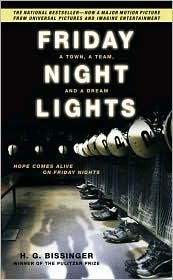
Return once again to the enduring account of life in the Mojo lane, to the Permian Panthers of Odessa — the winningest high school football team in Texas history. Odessa is not known to be a town big on dreams, but the Panthers help keep the hopes and dreams of this small, dusty town going. Socially and racially divided, its fragile economy follows the treacherous
boom-bust path of the oil business.In bad times, the unemployment rate barrels out of control; in good times, its murder rate skyrockets. But every Friday night from September to December, when the Permian High School Panthers play football, this West Texas town becomes a place where dreams can come true. With frankness and compassion, Bissinger chronicles one of the Panthers’ dramatic seasons and shows how single-minded devotion to the team shapes the community and inspires-and sometimes shatters-the teenagers who wear the Panthers’ uniforms. Includes Reader’s Group Guide inside. Now a major motion picture starring Billy Bob Thorton.
“In Odessa, football became hope disguised as Friday night entertainment.”
“The town carried its dreams on the shoulders of teenage boys.”
“Winning mattered because losing felt like losing identity itself.”
“Friday night lights illuminated both glory and heartbreak.”
Friday Night Lights
Nonfiction Reader
0:00
0:00
Show Podcast Text
Today we’re diving into Friday Night Lights by H.G. Bissinger, a groundbreaking work of nonfiction that goes far beyond football. Set in Odessa, Texas, during the late 1980s, the book follows the Permian Panthers, one of the most celebrated high school football teams in America. But beneath the touchdowns and roaring crowds lies a deeper story about identity, race, pressure, and survival in a struggling town.
Odessa was built on oil money, and when the economy collapsed, football became the community’s emotional lifeline. Every Friday night, the stadium lights transformed the dusty West Texas town into a place filled with hope. The Panthers were not simply athletes. To many residents, they represented pride, escape, and purpose.
Bissinger captures the excitement of the games with incredible energy, but the true strength of the book comes from its honesty. These players are teenagers carrying enormous expectations from parents, coaches, teachers, and an entire town. For some, football seems like the only path toward recognition or opportunity. Education often takes a back seat, and the pressure to win becomes overwhelming.
The book also examines the racial and social divisions woven into Odessa itself. Black athletes were celebrated on the field, yet inequality and segregation still shaped everyday life. Bissinger refuses to romanticize the culture surrounding high school football, even while showing why it holds such emotional power.
Readers often describe Friday Night Lights as heartbreaking because it reveals how adults project dreams onto children. Yet it’s also compelling because it captures the thrill of competition and the deep human desire to belong to something larger than ourselves.
Ultimately, Friday Night Lights is not really about football. It’s about a town searching for meaning, and the fragile dreams placed beneath those bright stadium lights every autumn weekend.