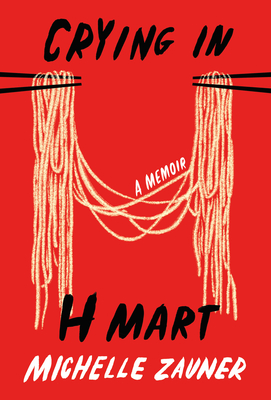
The New York Times bestseller from the Grammy-nominated indie rockstar Japanese Breakfast, an unflinching, deeply moving memoir about growing up mixed-race, Korean food, losing her Korean mother, and forging her own identity in the wake of her loss. In this exquisite story of family, food, grief, and endurance, Michelle Zauner proves herself far more than a dazzling
singer, songwriter, and guitarist. With humour and heart, she tells of growing up the only Asian-American kid at her school in Eugene, Oregon; of struggling with her mother’s particular, high expectations of her; of a painful adolescence; of treasured months spent in her grandmother’s tiny apartment in Seoul, where she and her mother would bond, late at night, over heaping plates of food. As she grew up, moving to the east coast for college, finding work in the restaurant industry, performing gigs with her fledgling band – and meeting the man who would become her husband – her Koreanness began to feel ever more distant, even as she found the life she wanted to live.
It was her mother’s diagnosis of terminal pancreatic cancer, when Michelle was twenty-five, that forced a reckoning with her identity and brought her to reclaim the gifts of taste, language, and history her mother had given her.
Vivacious, lyrical and honest, Michelle Zauner’s voice is as radiantly alive on the page as it is onstage. Rich with intimate anecdotes that will resonate widely, Crying in H Mart is a book to cherish, share, and reread.
“Food becomes memory, love, grief, and identity all at once.”
“Michelle Zauner writes grief with startling honesty and aching tenderness.”
“Crying in H Mart captures the loneliness of belonging to two worlds.”
“This memoir hurts deeply because it feels painfully real.”
Crying in H Mart
Nonfiction Reader
0:00
0:00
Show Podcast Text
Today we’re discussing Crying in H Mart, the deeply emotional memoir by Michelle Zauner, best known as the lead singer of Japanese Breakfast. This bestselling memoir explores grief, identity, family, and the complicated love between a mother and daughter.
Zauner writes about growing up Korean American in Oregon, often feeling caught between cultures. At school, she feels isolated as one of the only Asian American children, while at home she struggles under her mother’s demanding expectations. Yet despite the tension in their relationship, food becomes the emotional center connecting them. Food becomes memory, love, grief, and identity all at once.
The memoir shifts dramatically when Zauner’s mother is diagnosed with terminal pancreatic cancer. Suddenly, Michelle must confront not only the fear of losing her mother, but also the fear of losing her connection to her Korean heritage. Cooking traditional dishes, remembering family trips to Seoul, and revisiting childhood memories become ways of preserving both culture and love.
What readers praise most is the book’s emotional honesty. Michelle Zauner writes grief with startling honesty and aching tenderness. She does not simplify her mother into a saint or a villain. Instead, she captures the painful complexity of family relationships, especially the kind shaped by sacrifice, pressure, misunderstanding, and deep affection.
Many reviewers describe the memoir as devastating but beautifully written, filled with vivid descriptions of Korean food and intimate moments of heartbreak. Crying in H Mart captures the loneliness of belonging to two worlds. This memoir hurts deeply because it feels painfully real.