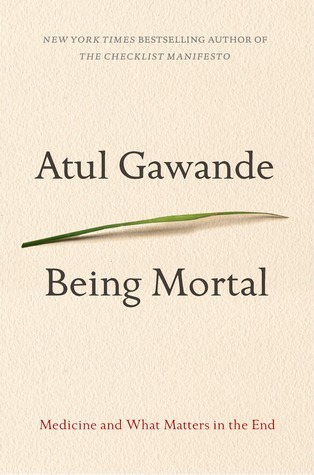
In Being Mortal, bestselling author Atul Gawande tackles the hardest challenge of his profession: how medicine can not only improve life but also the process of its ending Medicine has triumphed in modern times, transforming birth, injury, and infectious disease from harrowing to manageable. But in the inevitable condition of aging and death, the goals of
medicine seem too frequently to run counter to the interest of the human spirit. Nursing homes, preoccupied with safety, pin patients into railed beds and wheelchairs. Hospitals isolate the dying, checking for vital signs long after the goals of cure have become moot. Doctors, committed to extending life, continue to carry out devastating procedures that in the end extend suffering.
Gawande, a practicing surgeon, addresses his profession’s ultimate limitation, arguing that quality of life is the desired goal for patients and families. Gawande offers examples of freer, more socially fulfilling models for assisting the infirm and dependent elderly, and he explores the varieties of hospice care to demonstrate that a person’s last weeks or months may be rich and dignified.
Full of eye-opening research and riveting storytelling, Being Mortal asserts that medicine can comfort and enhance our experience even to the end, providing not only a good life but also a good end.
“Medicine can extend life, but it cannot outrun mortality.”
“A good ending begins with honest conversations.”
“Dignity matters as much as survival.”
“We all want to remain authors of our own story.”
Being Mortal
Nonfiction Reader
0:00
0:00
Show Podcast Text
Today we’re exploring Being Mortal, the powerful and deeply human book by surgeon and writer Atul Gawande. This isn’t just a book about death. It’s a book about how we live when time becomes fragile.
Gawande examines a modern medical system built to fight disease at all costs, even when treatment increases suffering instead of preserving meaning. Through moving stories of patients, families, and his own father’s illness, he asks difficult questions many people avoid: What makes life worth living near the end? When does care become harm? And who gets to decide?
One of the book’s strongest ideas is that medicine often focuses on survival while overlooking dignity, independence, and emotional connection. Nursing homes, hospitals, and aggressive procedures may prolong life, but they can also strip away control and humanity. Gawande argues that people facing aging or terminal illness deserve more than extra time. They deserve purpose, comfort, honesty, and choice.
The reviews surrounding this book reveal why it resonates so deeply. Many readers describe it as essential reading for anyone with aging parents, serious illness, or fears about mortality itself. Others praised Gawande’s compassion and clarity, especially his belief that meaningful conversations matter more than impossible promises. Several readers reflected on hospice care, explaining how understanding a loved one’s wishes transformed painful experiences into dignified ones.
What makes Being Mortal unforgettable is its refusal to treat death as failure. Instead, Gawande reminds us that mortality is universal, and that courage sometimes means choosing peace over endless intervention.
This book challenges readers to rethink aging, caregiving, and what truly matters at the end of life.