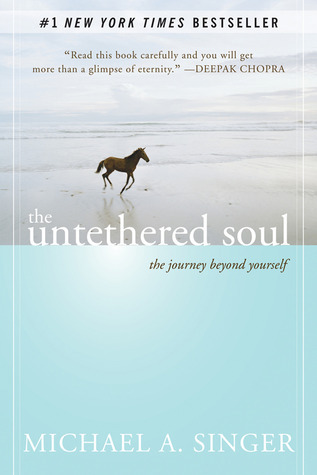
What would it be like to free yourself from limitations and soar beyond your boundaries? What can you do each day to discover inner peace and serenity? The Untethered Soul offers simple yet profound answers to these questions. Whether this is your first exploration of inner space, or you’ve devoted your life to the inward journey, this book will transform your
relationship with yourself and the world around you. You’ll discover what you can do to put an end to the habitual thoughts and emotions that limit your consciousness. By tapping into traditions of meditation and mindfulness, author and spiritual teacher Michael A. Singer shows how the development of consciousness can enable us all to dwell in the present moment and let go of painful thoughts and memories that keep us from achieving happiness and self-realization.
Copublished with the Institute of Noetic Sciences (IONS) The Untethered Soul begins by walking you through your relationship with your thoughts and emotions, helping you uncover the source and fluctuations of your inner energy. It then delves into what you can do to free yourself from the habitual thoughts, emotions, and energy patterns that limit your consciousness. Finally, with perfect clarity, this book opens the door to a life lived in the freedom of your innermost being.
“Your mind can become a noisy roommate instead of a trusted guide.”
“Freedom begins when we stop clinging to every passing thought.”
“Inner peace is not perfection
it is learning how to stay open.”
The Untethered Soul
Nonfiction Reader
0:00
0:00
Show Podcast Text
Today we’re exploring The Untethered Soul by Michael A. Singer, a bestselling spiritual guide that asks one deceptively simple question: who are you beyond the constant noise in your mind?
Singer introduces the idea that most of us live trapped inside an endless internal conversation. He calls this voice the “inner roommate,” the running commentary that judges, worries, complains, and replays old fears. According to the book, true freedom begins when we recognize that we are not the voice itself, but the observer listening to it.
The book blends mindfulness, meditation, and spiritual philosophy into a practical invitation to release attachment to painful memories and emotional habits. For many readers, this message feels transformative. They describe the book as clear, calming, and deeply reassuring, especially during stressful periods or major life transitions. Several readers even compare its wisdom to the work of Eckhart Tolle, praising its accessibility and directness.
But not everyone is convinced. Some critics argue that the book oversimplifies suffering and repeats the phrase “just let go” without offering enough practical guidance. Others feel the author overlooks the complexity of trauma, hardship, and emotional healing. These readers appreciate the philosophy but question whether enlightenment can really be achieved through awareness alone.
Still, whether you embrace the book completely or approach it skeptically, The Untethered Soul sparks reflection. It challenges us to examine our thoughts, loosen our grip on fear, and consider the possibility that peace may come not from controlling life, but from observing it with openness and compassion.