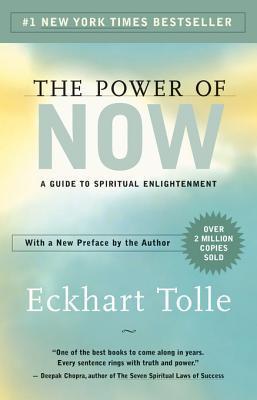
To make the journey into the Now we will need to leave our analytical mind and its false created self, the ego, behind. From the very first page of Eckhart Tolle’s extraordinary book, we move rapidly into a significantly higher altitude where we breathe a lighter air. We become connected to the indestructible essence of our Being, “The eternal, ever present One Life
beyond the myriad forms of life that are subject to birth and death.” Although the journey is challenging, Eckhart Tolle uses simple language and an easy question-and-answer format to guide us.
A word-of-mouth phenomenon since its first publication, The Power of Now is one of those rare books with the power to create an experience in readers, one that can radically change their lives for the better.
“The present moment is the only place where life truly exists.”
“Peace begins when we stop wrestling with the past and fearing the future.”
“The ego grows louder when silence could heal us.”
“Awareness transforms ordinary moments into meaningful experiences.”
The Power of Now
Nonfiction Reader
0:00
0:00
Show Podcast Text
Today we’re exploring The Power of Now by Eckhart Tolle, a book that has inspired millions while also dividing readers with its deeply spiritual approach to life and consciousness.
At its core, The Power of Now challenges us to stop living inside endless thoughts about the past and future. Tolle argues that true peace can only be found by fully experiencing the present moment. Through a conversational question-and-answer style, he encourages readers to recognize the ego, quiet mental noise, and become aware of the “Now.”
Many readers describe the book as transformative. Some found comfort during periods of anxiety, depression, and emotional crisis. Others praised its reminders to slow down, observe their thoughts, and reconnect with everyday life. One recurring takeaway is that people spend enormous amounts of time replaying regrets or imagining future problems instead of appreciating what is directly in front of them.
At the same time, critics argue the book can feel repetitive, overly mystical, or even condescending. Some readers disliked Tolle’s dismissal of analytical thinking and felt his spiritual language lacked practical guidance. Others believed the ideas could have been communicated far more simply.
Still, whether you see it as life-changing wisdom or frustrating philosophy, The Power of Now continues to spark powerful conversations about mindfulness and human awareness. Its message remains simple yet challenging: stop resisting the present moment.
In a world filled with distractions, deadlines, and constant noise, perhaps that’s why this book continues to resonate. It reminds us that peace may not arrive someday in the future. It may already exist in the quiet moments we keep overlooking.