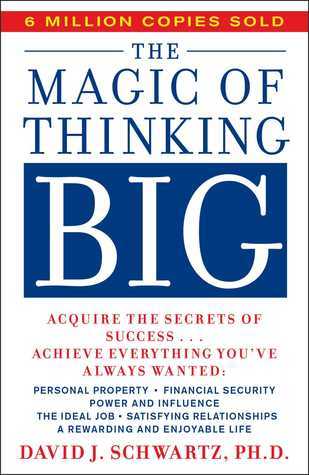
The Magic of Thinking Big gives you useful methods, not empty promises. Dr. Schwartz presents a carefully designed program for getting the most out of your job, your marriage and family life, and your community. He proves that you don’t need to be an intellectual or have innate talent to attain great success and satisfaction—but you do need to learn and understand
the habit of thinking and behaving in ways that will get you there. This CD set gives you those secrets! Believe you can succeed and you -Cure yourself of the fear of failure -Think and dream creatively -You are what you think you are -Make your attitudes your allies -Learn how to think positively -Turn defeat into victory -Use goals to help you grow -Think like a leader
“Success begins when people believe their thoughts can shape their future.”
“Big thinking turns ordinary goals into extraordinary possibilities.”
“Fear shrinks ambition faster than failure ever could.”
“Confidence grows when action replaces excuses and hesitation.”
The Magic of Thinking Big
Nonfiction Reader
0:00
0:00
Show Podcast Text
Today, we’re exploring The Magic of Thinking Big by David J. Schwartz, a classic self-help book that has inspired readers for decades to challenge limitations, think confidently, and pursue bigger goals in life.
At its core, the book argues that success is not reserved for geniuses or naturally gifted people. Instead, Schwartz believes achievement comes from mindset, confidence, and consistent action. Through practical advice and motivational examples, he encourages readers to overcome fear, stop making excuses, and develop habits that support growth in careers, relationships, and personal ambitions.
Many readers describe the book as life-changing. Some credit it with helping them improve careers, gain confidence, or completely rethink their outlook on life. Others praise its simple but powerful message: believe bigger, act bigger, and stop settling for average. One recurring theme in reviews is the idea that visualization matters. Schwartz repeatedly encourages readers to focus not only on current circumstances, but on future possibilities.
The book also introduces memorable concepts like “failure diseases,” including procrastination, excuse-making, and overthinking details. Readers often mention these ideas as practical tools they still remember years later. Even people who are skeptical of motivational books admit the advice about positivity, hard work, and confidence can be genuinely useful.
At the same time, several modern readers point out that parts of the book feel outdated. Written in the 1950s, some passages contain old-fashioned gender roles and perspectives that no longer resonate today. A few reviewers also feel Schwartz defines success too narrowly through money, status, and professional achievement.
Still, The Magic of Thinking Big remains influential because its central message is timeless: the way people think shapes the direction of their lives. For many readers, it serves as a reminder that confidence and action often matter more than talent alone.