
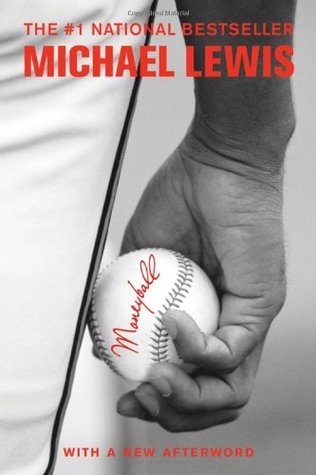
Lewis was in the room with the A’s top management as they spent the summer of 2002 adding and subtracting players and he provides outstanding play-by-play. In the June player draft, Beane acquired nearly every prospect he coveted (few of whom were coveted by other teams) and at the July trading deadline he engaged in a tense battle of nerves to acquire a lefty reliever. Besides being one of the most insider accounts ever written about baseball, Moneyball is populated with fascinating characters. We meet Jeremy Brown, an overweight college catcher who most teams project to be a 15th round draft pick (Beane takes him in the first). Sidearm pitcher Chad Bradford is plucked from the White Sox triple-A club to be a key set-up man and catcher Scott Hatteberg is rebuilt as a first baseman. But the most interesting character is Beane himself. A speedy athletic can’t-miss prospect who somehow missed, Beane reinvents himself as a front-office guru, relying on players completely unlike, say, Billy Beane. Lewis, one of the top nonfiction writers of his era (Liar’s Poker, The New New Thing), offers highly accessible explanations of baseball stats and his roadmap of Beane’s economic approach makes Moneyball an appealing reading experience for business people and sports fans alike. –John Moe
Categories
Published
Listen to Podcast
0:00
Show Podcast Text
At the center of the story is Billy Beane, the general manager of the Oakland Athletics. Faced with one of the smallest payrolls in Major League Baseball, Beane had to answer an impossible question: how do you compete against wealthy franchises like the New York Yankees without spending like them?
Instead of chasing flashy stars, Beane and his small team of analysts embraced sabermetrics, a data-driven approach that valued overlooked statistics like on-base percentage. While traditional scouts searched for athletic physiques and powerful swings, Beane searched for efficiency. He wanted players who simply found ways to win games.
The book follows the dramatic 2002 season, where the Athletics built a roster of undervalued players, including castoffs, injured veterans, and unlikely prospects. Against expectations, the team won 103 games and famously achieved a 20-game winning streak. More importantly, they challenged decades of baseball tradition.
Readers praise Moneyball not only as a baseball story, but as a lesson in innovation. Many see it as a blueprint for modern business strategy: question assumptions, ignore outdated thinking, and exploit inefficiencies others overlook.
Still, some critics point out that statistics alone cannot fully explain sports or human performance. Baseball remains unpredictable, emotional, and sometimes unfair. Yet that tension is exactly what makes Moneyball compelling. It’s not just about numbers. It’s about courage, reinvention, and the willingness to think differently when everyone else refuses to change.
Buy on Amazon