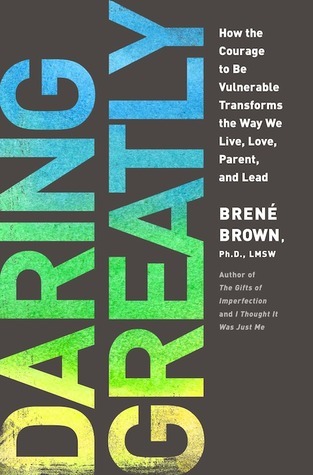
Researcher and thought leader Dr. Brené Brown offers a powerful new vision that encourages us to dare greatly: to embrace vulnerability and imperfection, to live wholeheartedly, and to courageously engage in our lives. “It is not the critic who counts; not the man who points out how the strong man stumbles, or where the doer of deeds could have done them better.
The credit belongs to the man who is actually in the arena, whose face is marred by dust and sweat and blood; who strives valiantly; . . . who at best knows in the end the triumph of high achievement, and who at worst, if he fails, at least fails while daring greatly.” —Theodore Roosevelt
Every day we experience the uncertainty, risks, and emotional exposure that define what it means to be vulnerable, or to dare greatly. Whether the arena is a new relationship, an important meeting, our creative process, or a difficult family conversation, we must find the courage to walk into vulnerability and engage with our whole hearts.
In Daring Greatly, Dr. Brown challenges everything we think we know about vulnerability. Based on twelve years of research, she argues that vulnerability is not weakness, but rather our clearest path to courage, engagement, and meaningful connection. The book that Dr. Brown’s many fans have been waiting for, Daring Greatly will spark a new spirit of truth—and trust—in our organizations, families, schools, and communities.
“Shame grows in silence but weakens when spoken aloud.”
“Connection begins when we stop hiding our imperfect selves.”
Daring Greatly
Nonfiction Reader
0:00
0:00
Show Podcast Text
Today we’re exploring Daring Greatly by Brené Brown, a groundbreaking book that challenges the way we think about vulnerability, courage, shame, and connection.
At the heart of this book is a powerful idea: vulnerability is not weakness. In fact, Brown argues that vulnerability is the birthplace of courage, creativity, love, and meaningful human connection. Whether we’re stepping into a difficult conversation, starting a new career, sharing creative work, or opening ourselves emotionally to another person, we are entering what Brown calls “the arena.” Vulnerability is not weakness; it is the birthplace of courage.
Brown’s research reveals how deeply shame influences our lives. Many people spend their days trying to avoid criticism, rejection, or failure. We hide imperfections, build emotional armor, and pretend we have everything under control. But according to Brown, this constant self-protection keeps us disconnected from others and disconnected from ourselves. Shame grows in silence but weakens when spoken aloud.
One of the book’s strongest messages is the importance of wholehearted living. Brown encourages readers to let go of perfectionism and embrace authenticity instead. Connection begins when we stop hiding our imperfect selves.
The book also explores how vulnerability impacts parenting, leadership, relationships, and workplace culture. Brown explains that people thrive in environments where they feel seen, valued, and safe enough to take emotional risks. Leaders who admit uncertainty often inspire more trust than those pretending to have all the answers.
What makes Daring Greatly so impactful is its reminder that courage is not about winning all the time. It’s about showing up anyway. Wholehearted living requires courage before comfort.