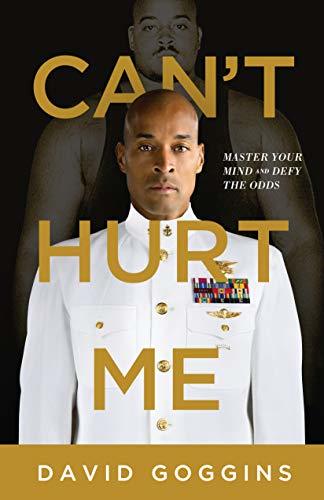
For David Goggins, childhood was a nightmare — poverty, prejudice, and physical abuse colored his days and haunted his nights. But through self-discipline, mental toughness, and hard work, Goggins transformed himself from a depressed, overweight young man with no future into a U.S. Armed Forces icon and one of the world’s top endurance athletes. The only
man in history to complete elite training as a Navy SEAL, Army Ranger, and Air Force Tactical Air Controller, he went on to set records in numerous endurance events, inspiring Outside magazine to name him “The Fittest (Real) Man in America.”In Can’t Hurt Me, he shares his astonishing life story and reveals that most of us tap into only 40% of our capabilities. Goggins calls this The 40% Rule, and his story illuminates a path that anyone can follow to push past pain, demolish fear, and reach their full potential.
“Mental toughness begins when excuses finally end.”
“Growth starts the moment comfort stops controlling your decisions.”
Can’t Hurt Me
Nonfiction Reader
0:00
0:00
Show Podcast Text
Today, we’re exploring Can’t Hurt Me by David Goggins, a memoir that has inspired millions with its intense message about discipline, suffering, and mental toughness. Love it or criticize it, this is a book that refuses to leave readers indifferent.
David Goggins begins with a childhood marked by poverty, racism, and abuse. He describes feeling trapped by fear, insecurity, and hopelessness before deciding to completely rebuild himself through relentless self-discipline. His transformation from an overweight young man into a Navy SEAL, endurance athlete, and military icon forms the emotional core of the book.
One of the central ideas is Goggins’s famous “40% Rule,” the belief that most people quit long before reaching their true limits. Throughout the memoir, he argues that discomfort is not something to avoid but something that strengthens character. His stories of brutal training, ultramarathons, and impossible physical challenges are meant to prove that the mind usually surrenders before the body does.
What makes the book powerful for many readers is its raw honesty. Goggins openly discusses failure, self-doubt, and fear while pushing readers to take responsibility for their own lives. He constantly emphasizes accountability, preparation, and refusing to settle for mediocrity.
At the same time, the book has sparked criticism. Some readers admire his extreme resilience, while others feel his approach glorifies pain and unhealthy self-punishment. The intense language and hyper-competitive mindset can feel overwhelming, even exhausting. Yet that tension is also part of the book’s impact. It forces readers to question how much potential they leave untouched because comfort feels safer.
In the end, Can’t Hurt Me is less about fitness and more about mindset. It challenges readers to confront excuses, embrace discomfort, and discover how resilient they truly are.