Doing well with money isn’t necessarily about what you know. It’s about how you behave. And behavior is hard to teach, even to really smart people. Money―investing, personal finance, and business decisions―is typically taught as a math-based field, where data and formulas tell us exactly what to do. But in the real world people don’t make financial decisions on
a spreadsheet. They make them at the dinner table, or in a meeting room, where personal history, your own unique view of the world, ego, pride, marketing, and odd incentives are scrambled together.
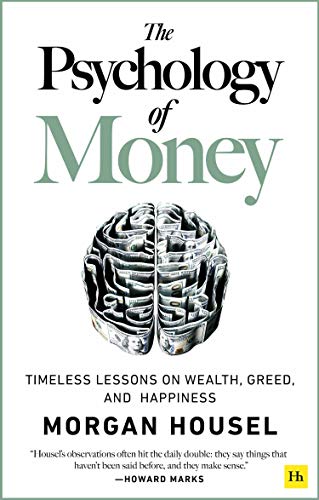
In The Psychology of Money, award-winning author Morgan Housel shares 19 short stories exploring the different ways people think about money and teaches you how to make better sense of one of life’s most important topics.
“Wealth is built more through behavior than brilliance.”
“Money buys control over your time, not just material things.”
“Compounding rewards patience more than intelligence.”
“The hardest financial skill is knowing when enough is enough.”
The Psychology of Money
Nonfiction Reader
0:00
0:00
Show Podcast Text
Today we’re exploring The Psychology of Money by Morgan Housel, a book that completely reframes how we think about wealth, investing, and financial success. Rather than focusing on formulas, stock predictions, or complicated spreadsheets, Housel argues that money is really about behavior. And behavior, as we all know, is messy, emotional, and deeply personal.
Through a series of short stories and reflections, Housel explains that financial decisions are rarely made logically. People make choices based on fear, pride, ego, personal history, and the desire to feel secure or respected. One of the book’s biggest ideas is that being good with money has less to do with intelligence and more to do with consistency, patience, and self-control.
Readers especially connected with Housel’s emphasis on compounding. He explains that wealth is often built quietly over decades, not through dramatic wins, but through steady habits repeated over time. The lesson is simple but powerful: staying invested and avoiding catastrophic mistakes matters more than chasing perfect returns.
Another idea that resonated deeply is the distinction between being rich and being wealthy. Richness is visible: expensive cars, luxury homes, designer lifestyles. Wealth, according to Housel, is usually invisible. It’s the money saved, invested, and left untouched. Many readers praised the book for challenging the pressure to constantly keep up with others financially.
The book also reminds readers that luck and risk play enormous roles in financial outcomes. Not every success comes purely from skill, and not every failure comes from bad decisions. That perspective gives the book a sense of humility that many finance books lack.
Some critics felt the advice was familiar or overly simple, but even they acknowledged how clearly and effectively the ideas were presented. The Psychology of Money succeeds because it transforms finance from a technical subject into a deeply human one.
Ultimately, this book isn’t really about getting rich. It’s about creating a life with flexibility, security, and peace of mind.