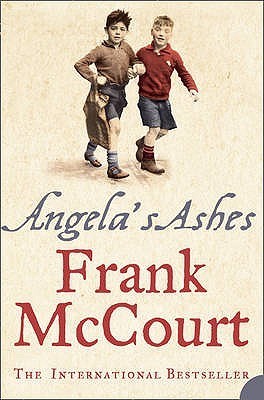
Imbued on every page with Frank McCourt’s astounding humor and compassion. This is a glorious book that bears all the marks of a classic. “When I look back on my childhood I wonder how I managed to survive at all. It was, of course, a miserable childhood: the happy childhood is hardly worth your while. Worse than the ordinary miserable childhood is the miserable
Irish childhood, and worse yet is the miserable Irish Catholic childhood.”
So begins the Pulitzer Prize winning memoir of Frank McCourt, born in Depression-era Brooklyn to recent Irish immigrants and raised in the slums of Limerick, Ireland. Frank’s mother, Angela, has no money to feed the children since Frank’s father, Malachy, rarely works, and when he does he drinks his wages. Yet Malachy—exasperating, irresponsible and beguiling—does nurture in Frank an appetite for the one thing he can provide: a story. Frank lives for his father’s tales of Cuchulain, who saved Ireland, and of the Angel on the Seventh Step, who brings his mother babies.
Perhaps it is story that accounts for Frank’s survival. Wearing rags for diapers, begging a pig’s head for Christmas dinner and gathering coal from the roadside to light a fire, Frank endures poverty, near-starvation and the casual cruelty of relatives and neighbors—yet lives to tell his tale with eloquence, exuberance and remarkable forgiveness.
Angela’s Ashes, imbued on every page with Frank McCourt’s astounding humor and compassion, is a glorious book that bears all the marks of a classic.
“Poverty shadows every page, but humor keeps the story breathing.”
“Frank survives because stories give him hope beyond hunger and shame.”
“Limerick feels cold, cruel, and unforgettable throughout the memoir.”
“This memoir transforms suffering into something deeply human and strangely uplifting.”
Angela’s Ashes
Nonfiction Reader
0:00
0:00
Show Podcast Text
Today we’re exploring Angela’s Ashes, the Pulitzer Prize-winning memoir by Frank McCourt. Few books balance heartbreak and humor as powerfully as this one. McCourt opens with a line that immediately sets the tone: his childhood was not simply miserable, but a miserable Irish Catholic childhood shaped by poverty, hunger, illness, and alcoholism.
Born in Depression-era Brooklyn, Frank is taken back to Limerick, Ireland, where his family struggles to survive. His father, Malachy, drinks away much of the family’s money, leaving Angela to care for the children with almost nothing. The memoir paints unforgettable scenes of leaking roofs, empty cupboards, flea-ridden rooms, and children wearing rags instead of proper clothing. Yet somehow, the story never loses its humanity.
What makes this memoir extraordinary is McCourt’s voice. He tells these painful memories through the eyes of his younger self, creating honesty without self-pity. Poverty shadows every page, but humor keeps the story breathing. Readers often describe the book as devastating, but also impossible to put down. Frank survives because stories give him hope beyond hunger and shame.
Many reviewers praise the memoir’s emotional depth and vivid atmosphere. Limerick feels cold, cruel, and unforgettable throughout the memoir. Others admire McCourt’s ability to uncover comedy in the bleakest situations, proving resilience can exist alongside suffering.
At its heart, Angela’s Ashes is about endurance, storytelling, and the dream of escape. It reminds us how survival often depends on imagination, compassion, and hope. This memoir transforms suffering into something deeply human and strangely uplifting. Thanks for listening, and we’ll see you next time on nonfiction reader.